For decades, construction and architecture have been defined by form, efficiency, and scale. Buildings rose quickly to meet immediate demand, often prioritizing speed over resilience and cost over consequence. Safety was treated as compliance, sustainability as an option, and long-term societal impact as a secondary concern. In regions exposed to climate instability, rapid urbanization, and humanitarian vulnerability, this fragmented approach has revealed its limits.
What the built environment increasingly requires is not more construction, but better construction—an integrated system where innovation, safety, sustainability, and human dignity are inseparable. Architecture must no longer exist as isolated structures, but as living frameworks capable of protecting communities, adapting to uncertainty, and supporting long-term societal progress.
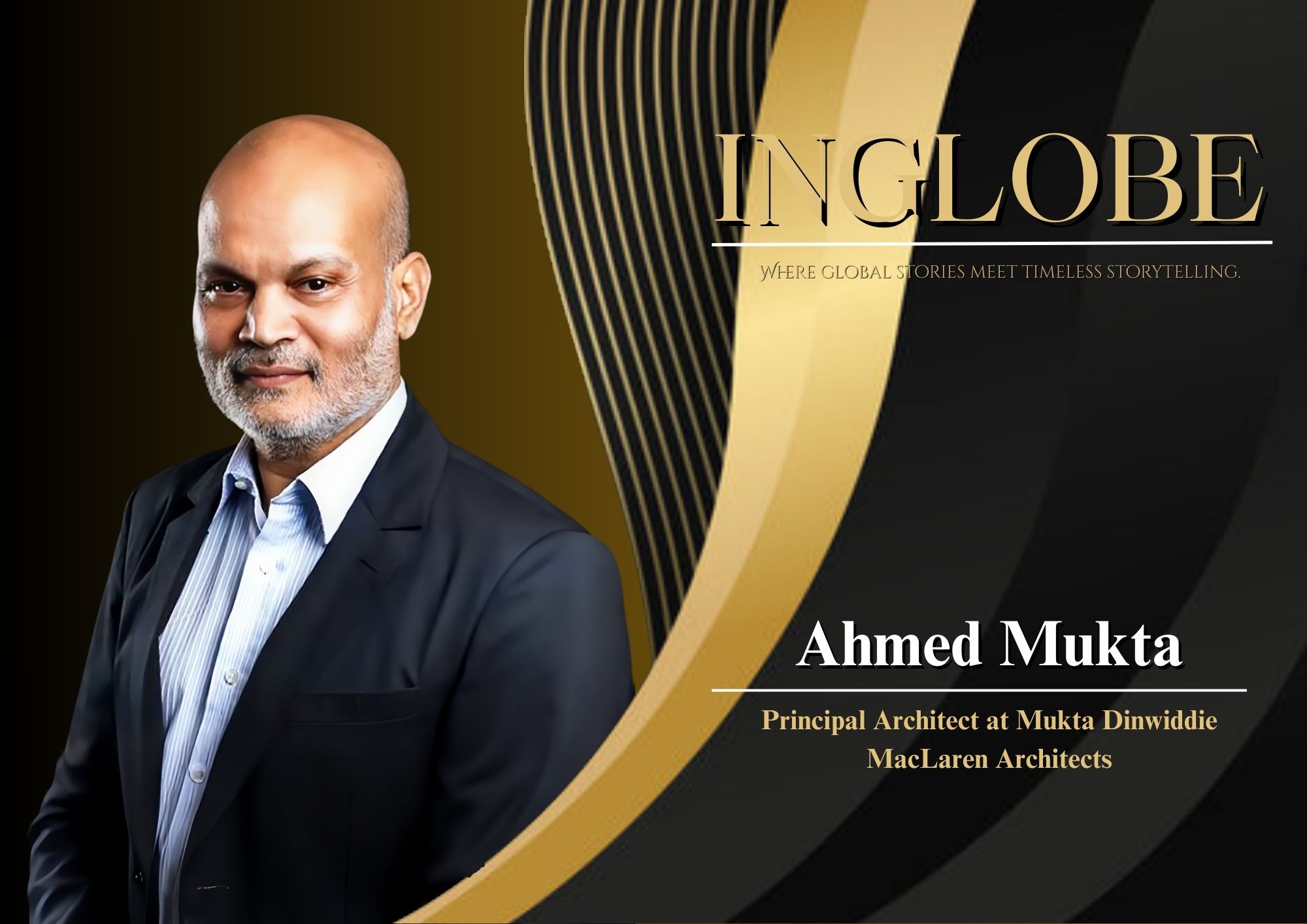
Ahmed Mukta recognized this shift not as a trend, but as a necessity. His work reflects a belief that modern construction must expand beyond aesthetics and engineering to embrace responsibility. In his view, architecture is no longer just about what is built, but about how it performs when conditions are most demanding—and how it serves people long after the ribbon is cut.
Where Lived Experience Shapes Architectural Purpose
Raised in Khulna, Bangladesh, Ahmed Mukta’s understanding of the built environment was shaped early by lived reality. In a region where water, weather, and land are in constant negotiation, buildings are not passive shelters; they are essential instruments of survival. Flooding, climate exposure, and infrastructural fragility are not abstract challenges, but daily conditions that influence how communities live, move, and endure.
This early exposure instilled a deep awareness of how architecture affects safety, stability, and dignity. It also revealed a critical truth: when buildings fail, the consequences extend far beyond physical damage. They disrupt healthcare, education, livelihoods, and social cohesion. Architecture, therefore, carries moral weight.
Rather than separating design from consequence, Ahmed’s perspective integrated them. Construction, in his understanding, had to anticipate risk rather than respond to disaster. It had to protect people who had limited margin for failure. This mindset would later define his professional philosophy and guide his approach to complex, high-stakes projects.
Building a Practice Rooted in Responsibility
Founded in 1995, Mukta Dinwiddie MacLaren Architects (MDM Architects) emerged with a clear mandate: to apply global standards of architectural excellence to local realities shaped by climate risk and humanitarian need. From its inception, the practice was guided by the belief that architecture must perform under pressure—not only in ideal conditions.
Over more than two decades, MDM Architects has evolved into a multidisciplinary practice recognized for its ability to operate in complex environments. The firm’s work spans disaster-resilient infrastructure, humanitarian resettlement, healthcare facilities, and crisis-response architecture. Each project is approached not as an isolated structure, but as part of a broader system affecting lives and communities.
What distinguishes Ahmed Mukta’s leadership is the refusal to pursue spectacle. His work is not driven by iconic forms or visual dominance. Instead, it is defined by clarity of purpose. Buildings are designed to endure extreme conditions, remain operational during crises, and serve multiple functions over time. Architecture becomes infrastructure for resilience rather than an expression of ego.
When Safety Becomes a Design Principle
In traditional construction models, safety is often treated as a regulatory threshold—something to be achieved through codes and checklists. Ahmed Mukta’s work reframes safety as a foundational design principle.
True safety, in his view, is not achieved through compliance alone. It is embedded in site selection, structural systems, material choice, circulation planning, and adaptability. A safe building is one that continues to protect and serve when surrounding systems fail.
This approach becomes especially critical in healthcare facilities, disaster shelters, and community infrastructure. These structures must remain functional during extreme weather events, power disruptions, or population displacement. Ahmed’s projects reflect a deep understanding that architectural decisions can determine outcomes during moments of crisis.
By integrating safety into the earliest stages of design, modern construction shifts from reactive protection to proactive resilience.
Sustainability as Long-Term Stewardship
Sustainability, in Ahmed Mukta’s philosophy, extends beyond energy efficiency or material selection. It is not a checklist or a certification—it is a commitment to longevity.
Sustainable architecture must consider lifecycle impact, maintenance realities, and social integration. A building that cannot be maintained, adapted, or embraced by its community ultimately fails, regardless of its technical performance. For Ahmed, sustainability means designing structures that remain relevant and functional decades into the future.
This perspective aligns sustainability with social equity. Buildings must serve the people who rely on them most, especially in regions where resources are limited and environmental pressures are high. Architecture becomes a form of stewardship—of land, resources, and human well-being.
Innovation Guided by Ethical Clarity
Innovation plays a vital role in modern construction, but Ahmed Mukta approaches it with discipline rather than enthusiasm alone. Technology, materials, and data-driven design are tools—not solutions in themselves.
The most meaningful innovation, in his work, is often invisible. It appears in structural systems that quietly absorb stress, in spatial planning that enables flexibility, and in designs that anticipate future needs without demanding constant intervention. Innovation must serve resilience, not novelty.
This approach ensures that progress does not outpace responsibility. Modern construction, when guided by ethical clarity, uses innovation to reduce risk, enhance safety, and improve quality of life rather than to chase trends.
Architecture as Community Infrastructure
One of the defining characteristics of Ahmed Mukta’s work is the recognition that buildings rarely serve a single function. In vulnerable regions, schools become shelters, healthcare facilities become crisis hubs, and public buildings become lifelines during emergencies.
This multifunctional approach strengthens community resilience. It ensures that architecture remains relevant across changing circumstances and reinforces the relationship between people and place. Buildings are not isolated objects, but active participants in social systems.
By designing with adaptability in mind, modern construction supports continuity rather than disruption. Communities are better equipped to respond to uncertainty when their built environment is designed to evolve with them.
Redefining Success in Modern Construction
In contemporary architecture, success is often measured by completion—by timelines met and budgets maintained. Ahmed Mukta’s work challenges this metric.
True success, in his view, is measured over time. It is revealed in how a building performs under stress, how it supports daily life, and how it contributes to long-term stability rather than risk. The most important moments in a building’s life often occur long after inauguration, during periods of crisis or transformation.
This long-term perspective demands accountability. Architectural decisions must be evaluated not only for immediate impact, but for their lasting consequences on people and communities.
Building Beyond Structures
As climate instability, population growth, and humanitarian challenges reshape the global landscape, construction stands at a critical crossroads. It can continue to prioritize speed and spectacle, or it can embrace a more disciplined, humane vision—one that recognizes the built environment as a long-term partner in societal progress.
Ahmed Mukta’s work embodies this shift. Building beyond structures means acknowledging that every foundation, wall, and system carries responsibility. It means designing with foresight, constructing with care, and committing to outcomes that endure beyond the present moment.
In this emerging paradigm, modern construction becomes more than an industry. It becomes a form of service—quietly shaping safer, more resilient futures for generations to come.
Ahmed Mukta Building Beyond Structures: Modern construction connects innovation, safety, sustainability, and long-term societal progress.
Articles

Tad AI: The AI Music Generator Transforming Soundtracks for Video Creators
Tad AI isn’t just another AI tool — it’s a music-generation platform for creators.
Read More →
When To Transition From In-House Fulfillment To A 3PL Partner
Save costs by outsourcing fulfillment when your business begins to grow...
Read More →
Top 5 Reasons to Invest in Dubai Real Estate
Dubai is one of the fastest-growing metropolises, offering endless opportunities...
Read More →
What’s In, What’s Out: Digital Marketing Trends You Can’t Ignore
The digital marketing world honestly doesn’t sit still for a second...
Read More →