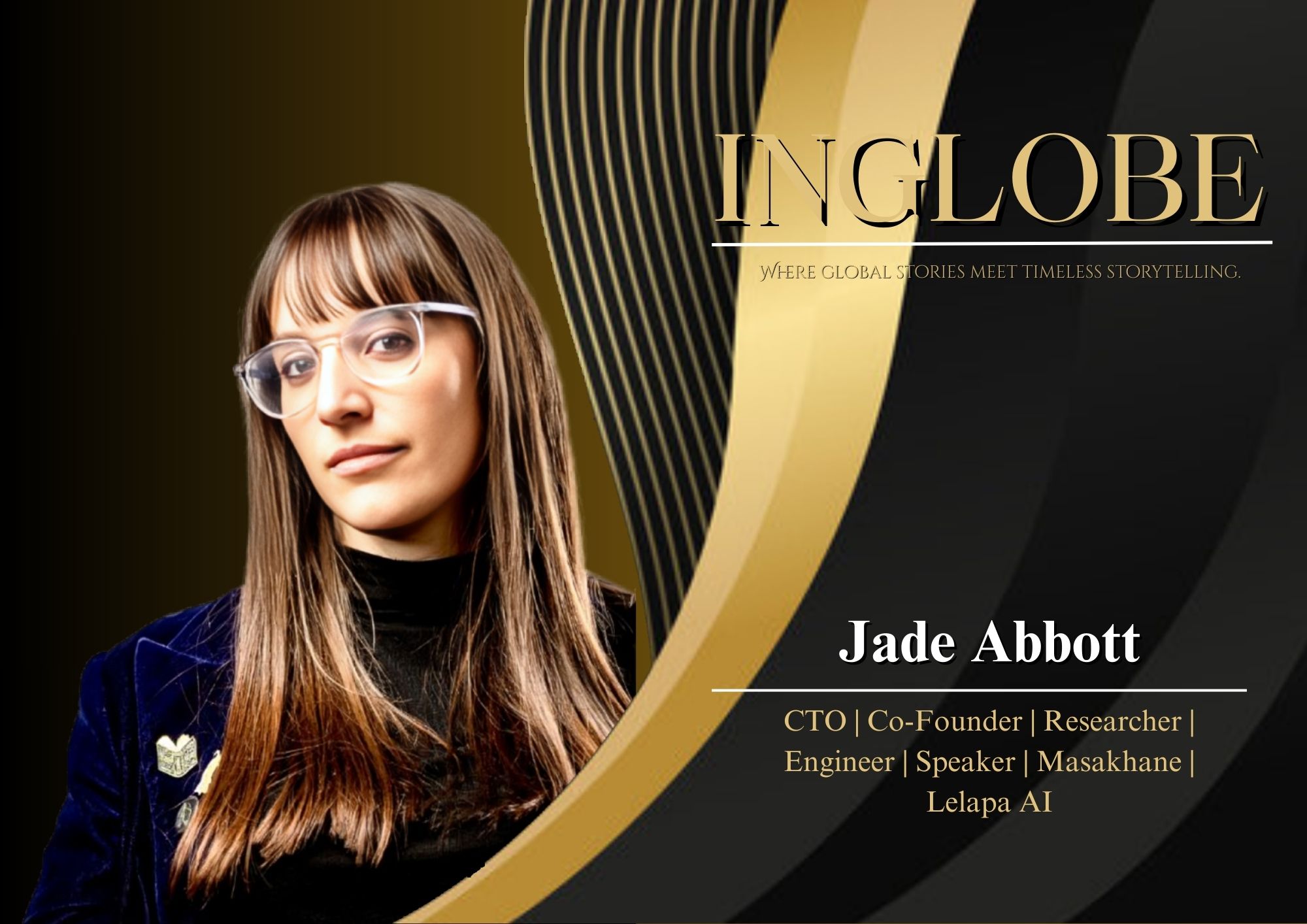
Artificial intelligence is rapidly reshaping how societies communicate, conduct business, and access information. From automated translation systems to digital assistants and advanced data analytics, machine learning technologies increasingly influence the way people interact with the digital world. Yet as these systems evolve, an important question emerges: whose voices are represented in the technologies that shape our future?
For Jade Abbott, the answer must include the languages, cultures, and perspectives of the African continent.
As the Chief Technology Officer and Co-Founder of Lelapa AI, Abbott has dedicated her career to building artificial intelligence systems that reflect the linguistic diversity of Africa. With more than a decade of experience deploying machine learning solutions across sectors such as banking, startups, and nonprofit organizations, she has become one of the most influential figures in Africa’s growing artificial intelligence ecosystem.
Her work combines advanced research with real-world engineering, ensuring that technological innovation not only expands capability but also broadens access to digital participation.
At its core, Abbott’s mission is about inclusion. She believes that artificial intelligence must serve the full spectrum of global communities, not only those whose languages and data have historically dominated the technology landscape.
Engineering AI for African Languages
One of the central challenges facing modern artificial intelligence lies in the imbalance of linguistic representation.
Many of the world’s most widely used AI systems are trained primarily on data from a small number of dominant languages such as English, Mandarin, or Spanish. While these technologies have achieved impressive performance in those contexts, they often struggle to support the thousands of other languages spoken around the world.
This imbalance creates barriers to digital access for communities whose languages remain underrepresented in technological development.
Abbott’s work directly addresses this challenge.
At Lelapa AI, she leads efforts to develop natural language processing systems tailored specifically for African languages. These technologies allow people to interact with digital platforms using the languages that reflect their cultural and linguistic identities.
For millions of individuals across the continent, this represents more than technological convenience.
It represents recognition.
By ensuring that African languages are integrated into the development of AI systems, Abbott and her team are helping to expand digital inclusion while strengthening the presence of African voices in global technological conversations.
Her approach reflects a broader philosophy that guides her work.
Technology should not merely advance innovation; it should expand opportunity.
The Masakhane Movement
Abbott’s commitment to inclusive artificial intelligence extends far beyond her work as an entrepreneur.
In 2017, she co-founded Masakhane, a grassroots research collective dedicated to advancing natural language processing for African languages.
The name Masakhane translates to “let us build together,” a phrase that captures the collaborative spirit at the heart of the initiative.
Masakhane brings together researchers, engineers, linguists, and students from across Africa and the global diaspora to work on open-source projects focused on language technology. Rather than relying solely on large institutional research labs, the collective demonstrates how distributed collaboration can drive meaningful innovation.
Through shared research, community training, and open access resources, Masakhane has helped establish one of the most influential grassroots movements within the global AI research community.
Its projects have contributed to new language datasets, machine learning models, and research publications that expand the capabilities of natural language processing systems for African languages.
The movement also serves as an educational platform, empowering young researchers and developers across the continent to participate in the development of cutting-edge AI technologies.
For Abbott, this collaborative model reflects a powerful truth about innovation.
Progress does not always originate from centralized institutions.
Sometimes it emerges from communities united by a shared vision.
Bridging Research and Real-World Applications
While academic research plays an essential role in advancing artificial intelligence, many breakthroughs remain confined to research papers or experimental prototypes.
Abbott’s career has focused on ensuring that these innovations move beyond theory and into practical application.
Her experience deploying machine learning systems across industries has given her a deep understanding of how AI technologies must function within real operational environments.
In sectors such as banking and financial services, machine learning models must process large volumes of data with high accuracy and reliability. In startup environments, solutions must be agile and adaptable. Within nonprofit organizations, technology often needs to operate efficiently under resource constraints.
Navigating these varied contexts requires both technical expertise and strategic insight.
Abbott’s ability to combine research knowledge with engineering practice allows her to build AI systems that are not only innovative but also scalable and dependable.
By bridging the gap between academic research and production-level deployment, she ensures that artificial intelligence can deliver tangible benefits to businesses, institutions, and communities.
Recognition and Global Influence
Abbott’s work has attracted growing international recognition as the global technology community begins to appreciate the importance of inclusive innovation.
In 2024, she was named one of MIT Technology Review’s Innovators Under 35, a prestigious recognition highlighting some of the world’s most promising young technology leaders.
She has also been honored with the Mail & Guardian 200 Young South Africans Award, which recognizes individuals making significant contributions to the country’s development across fields such as science, business, and public service.
These accolades reflect more than personal achievement.
They highlight the broader importance of the work being done to ensure that Africa plays an active role in shaping the future of artificial intelligence.
As global technology ecosystems become increasingly interconnected, the perspectives and innovations emerging from African researchers and entrepreneurs are becoming essential contributors to the evolution of AI.
A Vision for Inclusive Artificial Intelligence
The rapid expansion of artificial intelligence presents both opportunity and responsibility.
As machine learning systems become embedded in communication platforms, education systems, financial services, and public infrastructure, the decisions made today will shape how billions of people interact with technology in the future.
For Abbott, the path forward is clear.
Artificial intelligence must reflect the diversity of the world it serves.
This means investing in language technologies that support underrepresented communities, creating collaborative research networks that empower emerging talent, and ensuring that innovation remains accessible to individuals across geographic and cultural boundaries.
Through her leadership at Lelapa AI and her collaborative work with Masakhane, Abbott continues to push the boundaries of what inclusive technology can achieve.
Shaping Africa’s Digital Future
Africa is home to one of the most dynamic and rapidly growing technology ecosystems in the world.
Across the continent, entrepreneurs, researchers, and engineers are developing solutions that address local challenges while contributing to global innovation.
Jade Abbott stands among the leaders guiding this transformation.
Her work demonstrates how artificial intelligence can serve as both a technological advancement and a cultural bridge connecting languages, communities, and opportunities.
By ensuring that African languages and perspectives remain integral to the development of AI systems, she is helping shape a future where technology reflects the full diversity of human experience.
And in doing so, Jade Abbott reminds us that the future of artificial intelligence should not be built for a select few.
It should be built for everyone.
Jade Abbott: Building Africa's AI Future Through Language, Innovation & Open Collaboration