Artificial intelligence is often discussed in terms of speed, automation, and technological scale. Breakthroughs are measured through computational power, advanced algorithms, and the ability to process enormous amounts of data. Yet behind these systems lies a deeper question. Who benefits from innovation, and whose lives are changed by it?
For Nidaa Awawda, the answer has always been clear.
Technology must serve humanity.
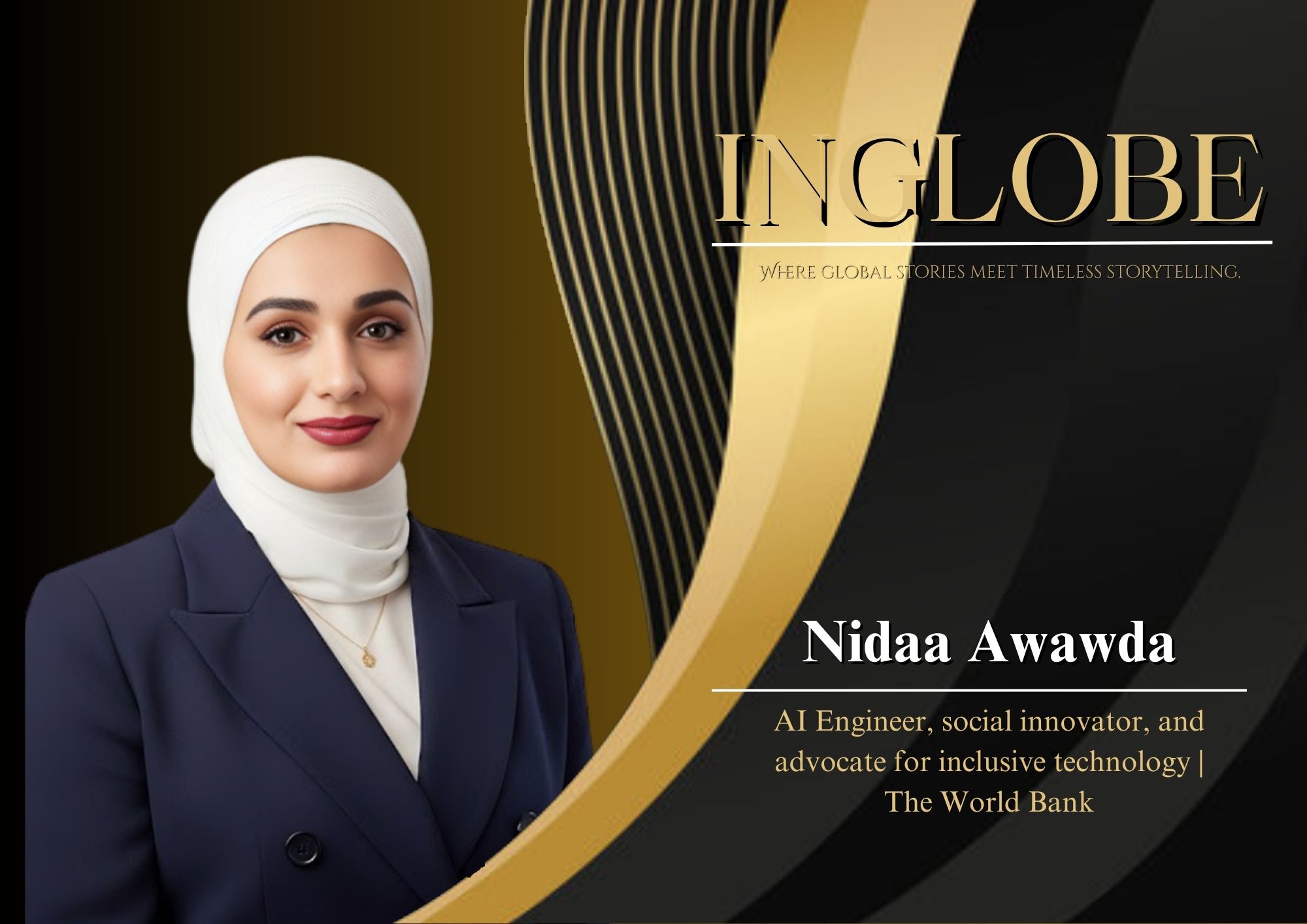
As a Palestinian AI engineer, social innovator, and global advocate for inclusive technology, Awawda represents a new generation of technologists reshaping how innovation is defined. Her work brings together artificial intelligence, healthcare technology, and social impact with a single guiding principle. Advanced technologies should expand opportunity, particularly for communities that have historically been excluded from the digital revolution.
Through her work, she challenges the assumption that innovation belongs only to the world’s largest technology hubs. Instead, she demonstrates that transformative ideas can emerge from anywhere when technology is guided by purpose and human understanding.
Nidaa Awawda: Innovation Rooted in Personal Experience
For Nidaa Awawda, technology has never been an abstract field of study.
It is deeply personal.
Living with the effects of polio from a young age, she grew up with firsthand awareness of the barriers faced by individuals with disabilities. Everyday activities that many people take for granted often required additional resilience, creativity, and determination.
Rather than allowing these experiences to define limitations, Awawda transformed them into motivation.
She began to see technology not only as a career path but as a tool capable of reshaping lives. Innovation could address challenges that traditional systems often struggled to solve.
This perspective shaped the direction of her work.
Her focus would not be technology for its own sake, but technology designed to improve real human conditions.
Building Technology That Supports Healthcare Decisions
One of Awawda’s most impactful innovations is NRevive, an artificial intelligence powered system designed to assist medical professionals caring for patients in critical conditions.
Coma care is one of the most complex areas of healthcare. Physicians often face enormous volumes of patient data, medical notes, and diagnostic information that must be interpreted quickly and accurately.
NRevive was created to support this process.
Using machine learning and advanced data analysis, the system helps healthcare professionals identify patterns within patient records that may otherwise remain hidden. These insights can support clinical decision making and help doctors respond more effectively to complex medical cases.
Importantly, Awawda designed the system with a clear philosophy.
Artificial intelligence should enhance human expertise rather than replace it.
Doctors remain at the center of care decisions, but AI tools can provide additional insights that help them work more effectively, particularly in high pressure environments where time and resources are limited.
For hospitals operating with limited staff or overwhelmed by patient needs, such technologies can provide meaningful support.
Innovation Beyond Technology
While NRevive represents a powerful example of applied artificial intelligence, Awawda’s work extends far beyond a single invention.
She has become a strong advocate for inclusive education in science, technology, engineering, and mathematics.
Through workshops, mentorship programs, and educational initiatives, she has helped more than three hundred young people develop skills in artificial intelligence and digital innovation.
Her focus is particularly directed toward youth from marginalized communities.
Many young people in underserved regions grow up believing that technology is something created elsewhere. Awawda challenges that narrative by encouraging them to see themselves as creators of technology rather than merely users.
By teaching AI fundamentals, coding skills, and problem solving frameworks, she helps students understand that innovation begins with curiosity and creativity.
The goal is not simply to teach technical skills.
It is to cultivate confidence.
When young people believe they can shape the technologies around them, entirely new possibilities emerge.
Representing a Global Voice for Inclusive Innovation
Awawda’s work has brought her to international technology forums and global innovation summits where she represents both her ideas and the communities that inspire them.
At these events she speaks about the importance of inclusive technology development and the need to ensure that artificial intelligence systems reflect diverse perspectives.
Too often, technological innovation emerges from environments that do not fully represent the global population.
As a result, technologies can unintentionally reinforce inequalities rather than reduce them.
Awawda advocates for a different approach.
She emphasizes the importance of including voices from underrepresented regions and communities within global technology discussions.
By bringing diverse perspectives into innovation ecosystems, technology becomes better equipped to address real world challenges.
Her advocacy also extends to disability rights and accessible technology design.
Systems built with accessibility in mind often benefit everyone, not only those with disabilities. Inclusive design encourages creativity and leads to solutions that are more adaptable and resilient.
Recognition for Human Centered Innovation
The impact of Awawda’s work has begun to receive international recognition.
Her healthcare technology initiative NRevive has been nominated among the Top 20 eHealth Projects at the World Summit on the Information Society in 2025.
The recognition highlights both the technological sophistication and humanitarian purpose behind the project.
Such distinctions demonstrate that innovation guided by social responsibility can stand alongside the most advanced technological developments.
For Awawda, however, recognition is not the ultimate objective.
The broader vision remains clear.
Technology must continue evolving in ways that expand access, protect public health, and empower individuals to participate in shaping the future.
A Vision for the Future of Artificial Intelligence
Artificial intelligence is transforming industries ranging from healthcare and education to environmental science and global communication.
Yet as technology grows more powerful, the responsibility to guide its development becomes increasingly important.
Awawda believes that innovation must always remain anchored in human values.
AI systems should strengthen healthcare outcomes, improve environmental sustainability, and open new educational opportunities for future generations.
These goals require collaboration across disciplines and cultures.
Technologists, educators, policymakers, and communities must work together to ensure that emerging technologies reflect the needs and aspirations of the people they serve.
Expanding Possibility Through Purpose
Nidaa Awawda’s journey demonstrates that meaningful innovation rarely emerges from convenience alone.
It often grows from lived experience, resilience, and a determination to improve the world for others.
By transforming personal challenges into a mission for technological progress, she has built a career that bridges artificial intelligence with human empathy.
Her work reminds us that the most powerful technologies are not those that merely accelerate efficiency.
They are the ones that expand opportunity.
And as artificial intelligence continues shaping the future, leaders like Nidaa Awawda show how innovation guided by purpose can create a more inclusive and hopeful world.
Nidaa Awawda: Artificial Intelligence Meets Purpose — Building Technology for Humanity