In today’s interconnected world, national security is no longer defined solely by physical borders or conventional defense capabilities. Increasingly, it is shaped by digital infrastructure, advanced technologies, and the ability of governments to secure and manage information in real time. Cloud computing, artificial intelligence, and data-driven intelligence systems have become essential tools for protecting nations and responding to complex global threats.
Leading within this environment requires a unique combination of strategic vision, operational discipline, and ethical responsibility. Technology alone cannot safeguard national interests. It must be guided by leaders who understand both the power of innovation and the weight of the mission it supports.
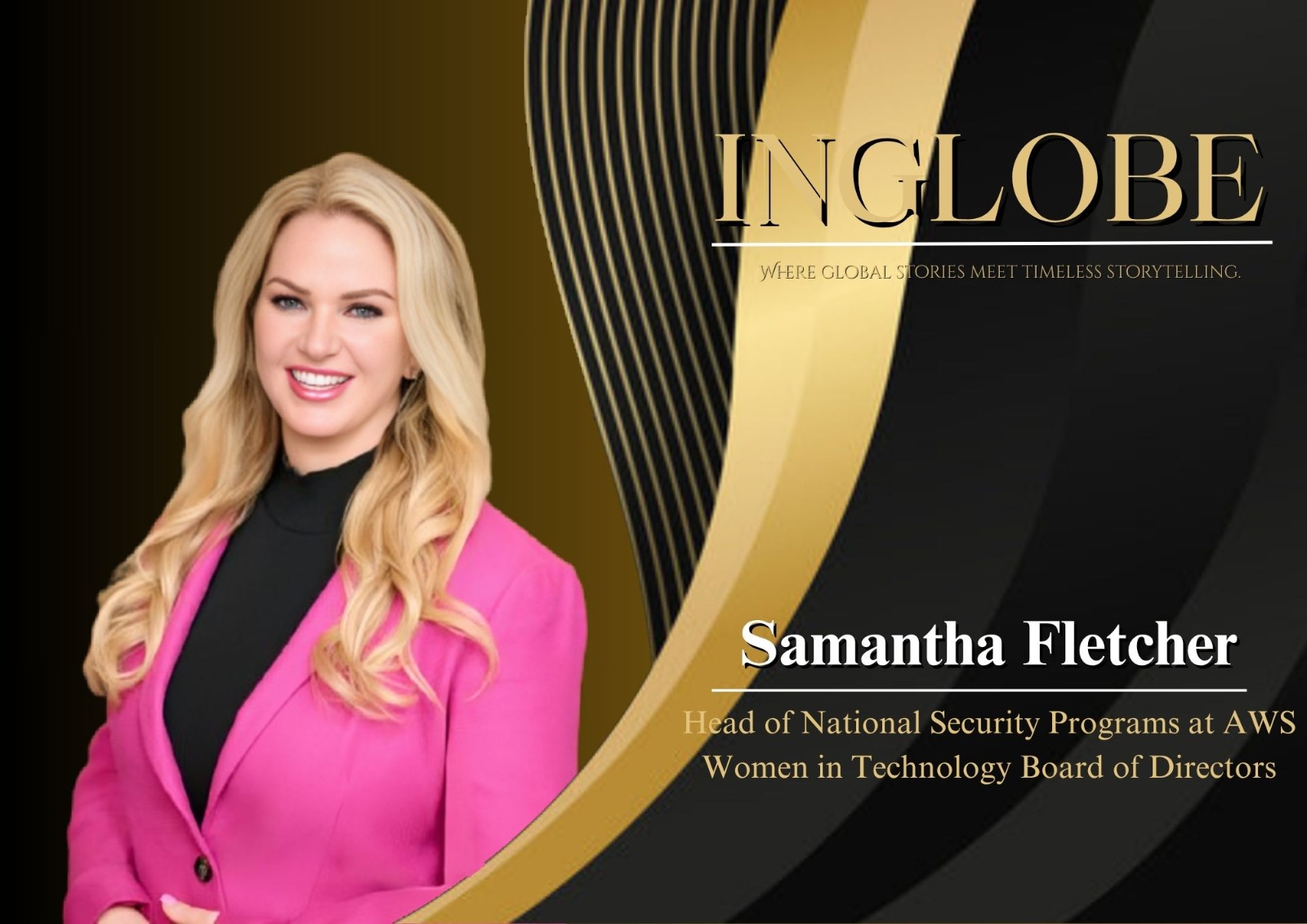
Among those leaders is Samantha Fletcher.
As Head of National Security Programs at Amazon Web Services and a decorated combat veteran, Fletcher represents a generation of professionals shaping how national defense evolves in the digital era. Her career spans more than two decades across military service, government initiatives, and technology leadership, placing her at the intersection of cloud infrastructure, artificial intelligence, and global security.
Through her work, she continues to demonstrate that technological advancement must move forward alongside accountability, trust, and a clear sense of purpose.
Leadership Forged in Service
Samantha Fletcher’s leadership journey began long before her work in cloud technology and national security programs.
At the age of seventeen, she enlisted in the United States Army, stepping into a profession defined by service, discipline, and responsibility. Within a short time, she was deployed overseas, entering environments where decisions carried immediate and profound consequences.
Her service included deployments to Iraq and involvement in intelligence operations supporting missions in Afghanistan as well as across regions of the Middle East and Africa. These experiences exposed her to the realities of leadership under pressure.
In combat environments, leadership operates differently than in many traditional organizational structures. Hierarchies remain important, but the ultimate determinant of success becomes trust between individuals working toward a shared mission.
Teams rely on one another not simply through formal authority, but through mutual accountability and unwavering commitment.
These early experiences shaped Fletcher’s philosophy of leadership, emphasizing service, humility, and collective success. She learned that effective leadership is rarely about individual recognition. Instead, it emerges from the strength and cohesion of the team.
The lessons forged during those early deployments would continue to guide her throughout the next phases of her career.
Bridging Defense and Technological Innovation
Following her military service, Fletcher remained deeply engaged in national security initiatives, transitioning into roles within the defense technology sector.
This phase of her career focused on developing advanced technological capabilities designed to strengthen operational readiness and support modern defense strategies. Among the areas she worked in were counter–unmanned aerial systems and electronic warfare technologies, both critical components of contemporary security operations.
As defense strategies increasingly relied on sophisticated digital systems, Fletcher’s role expanded into large-scale program leadership. She oversaw initiatives involving complex technological infrastructure and operational systems supporting both the United States Intelligence Community and the Department of Defense.
These programs often involved budgets reaching into the billions of dollars and required careful coordination across multiple agencies, contractors, and operational units.
Managing projects of this scale demanded not only technical expertise but also the ability to align diverse stakeholders around a shared mission.
Through these experiences, Fletcher developed a reputation for translating emerging technologies into practical capabilities that could enhance national security operations.
Her work demonstrated that innovation must always remain grounded in operational effectiveness.
Technology becomes valuable only when it strengthens the mission it is designed to support.
Leading in the Age of Cloud Infrastructure
Today, Samantha Fletcher’s work at Amazon Web Services places her at the forefront of one of the most transformative technological shifts affecting national security.
Cloud computing has fundamentally changed how governments manage information, collaborate across agencies, and analyze intelligence.
Traditional data systems often required agencies to operate within isolated environments where information moved slowly between departments. Cloud infrastructure, by contrast, enables secure collaboration, real-time data analysis, and rapid deployment of new digital capabilities.
For defense and intelligence organizations, this shift has profound implications.
With the support of cloud-based platforms, agencies can process vast volumes of data, identify patterns across global information streams, and accelerate decision-making during critical moments.
As Head of National Security Programs, Fletcher leads initiatives that help governments and defense organizations adopt these technologies in secure and responsible ways.
Her work focuses on ensuring that innovation does not compromise reliability or security. In environments where sensitive information and national interests are at stake, technological solutions must meet the highest standards of protection and operational stability.
Through careful program management and strategic oversight, Fletcher helps organizations harness the benefits of digital infrastructure while maintaining the integrity of their mission.
Scaling Mission-Critical Programs
Managing national security initiatives requires a disciplined leadership approach capable of balancing speed with precision.
Fletcher emphasizes three principles that guide her leadership.
The first is clarity of purpose. In environments characterized by rapid technological change and evolving threats, teams must remain aligned around clearly defined mission outcomes.
The second principle is operational rigor. Large-scale programs involving advanced technology require detailed planning, strong governance, and continuous evaluation to ensure that systems perform reliably under pressure.
The third is accountability. Every member of a team must understand their role within the larger mission and take responsibility for delivering results.
By maintaining this structure, Fletcher creates an environment where highly skilled professionals can innovate without losing sight of operational stability.
Her leadership allows organizations to move forward quickly while preserving the discipline necessary for national security operations.
The Human Dimension of Leadership
Despite her extensive experience in advanced technology systems, Fletcher consistently emphasizes that people remain the most important element of any organization.
Technology may enable transformation, but human insight, collaboration, and trust ultimately determine whether innovation succeeds.
Her leadership philosophy reflects this belief.
Fletcher prioritizes empathy, transparency, and empowerment within the teams she leads. By creating environments where individuals feel valued and supported, she encourages creativity, problem-solving, and shared responsibility.
This human-centered perspective was further strengthened by personal challenges she faced outside the professional arena.
While balancing the responsibilities of her career and family life, Fletcher navigated a breast cancer diagnosis that required resilience, determination, and support from those around her.
The experience deepened her understanding of vulnerability and strengthened her commitment to authentic leadership. She believes that when leaders demonstrate openness and compassion, they create stronger bonds within their organizations.
Trust becomes easier to build, and teams are better equipped to navigate difficult challenges together.
Inspiring Future Leaders
Beyond her professional responsibilities, Fletcher remains deeply committed to mentorship and advocacy.
She actively supports initiatives designed to increase the representation of women within national security and technology fields. Through organizations such as Women in Technology and Women in National Security, she mentors emerging professionals and encourages young women to pursue careers in science, technology, engineering, and defense.
These efforts reflect her belief that leadership carries a responsibility to cultivate future generations.
For Fletcher, the legacy of leadership is measured not only through successful programs or technological advancements but also through the people who are inspired to continue the work.
By sharing her experiences and offering guidance to emerging leaders, she helps create pathways for others to contribute to national security and technological innovation.
Leadership in the Era of Digital Sovereignty
As digital infrastructure becomes increasingly central to global security, the responsibilities of leadership continue to evolve.
Governments must balance innovation with accountability, ensuring that technological capabilities strengthen national resilience without compromising ethical standards or public trust.
Leaders capable of navigating this complexity will shape the future of national defense.
Samantha Fletcher stands among those leaders.
Her career reflects a rare combination of military service, technological expertise, and human-centered leadership. From combat deployments to large-scale cloud initiatives, she has consistently demonstrated the ability to align advanced technologies with mission-driven outcomes.
In an age where digital systems increasingly define the landscape of global security, Fletcher’s work highlights an essential truth.
Leadership requires not only command of technology but also custodianship of the mission it serves.
And in that responsibility, Samantha Fletcher continues to help shape the future of national security.
Samantha Fletcher: Cloud, Command & Custodianship — Leadership in the Era of Digital Sovereignty