Dr. Ko-Cheng Fang: Visionary Global Leaders Redefining Success in 2026
Every generation is remembered for the breakthroughs that fundamentally reshape the way humanity lives, communicates, and imagines the future. The Industrial Revolution transformed manufacturing and transportation. Electricity illuminated cities and accelerated global development. The digital revolution connected billions of people across continents, creating an information economy unlike anything the world had experienced before. Today, we stand at the threshold of another defining chapter one driven not simply by faster technologies, but by entirely new ways of understanding intelligence, energy, materials, and human potential.
Modern society has become inseparable from technology. Artificial intelligence is redefining decision-making across industries. Quantum research is pushing the limits of computational science. Biotechnology is transforming healthcare and extending possibilities once considered unattainable. Every day, enormous volumes of information move across global networks that power governments, businesses, research institutions, and everyday life. Yet beneath this extraordinary progress lies an important reality: many of the technological systems upon which the modern world depends are approaching their practical limits.
Traditional semiconductor technology, despite decades of remarkable advancement, now faces increasing challenges. As processors become smaller and more powerful, issues such as heat generation, energy consumption, manufacturing complexity, and physical limitations continue to grow. Artificial intelligence requires computational capabilities that far exceed those demanded by previous generations of software. Data centres consume increasing amounts of electricity, while sustainability has become as critical as processing speed. The technologies that transformed the twentieth century must now evolve to meet the demands of the twenty-first.
This changing landscape has created an urgent need for a different kind of innovator.
Not simply engineers capable of improving existing systems, but visionaries willing to question the assumptions upon which those systems were built. Progress no longer depends solely on incremental refinement. It increasingly depends on individuals prepared to rethink technology from its very foundations.
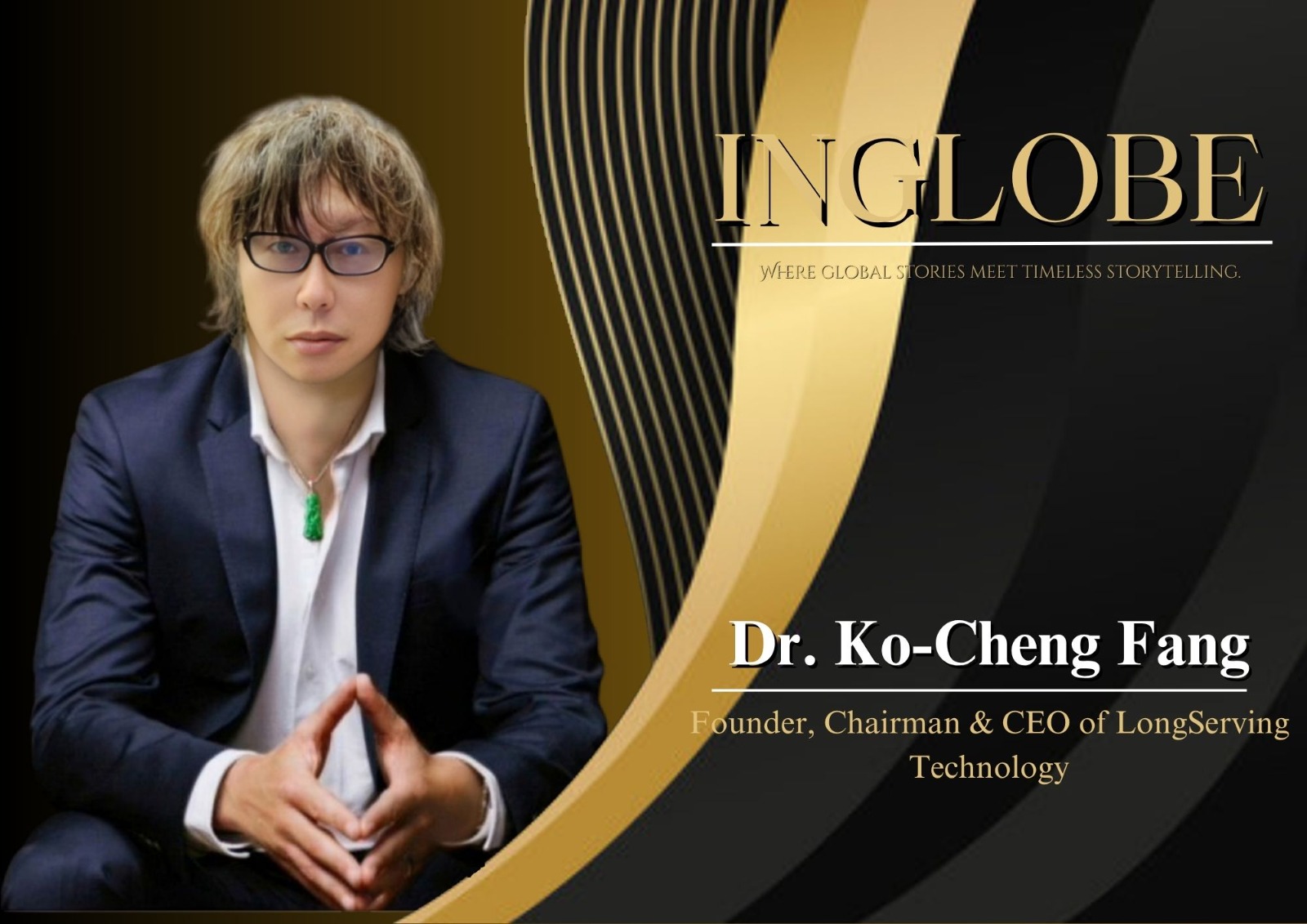
Among those individuals stands Dr. Ko-Cheng Fang, Founder, Chairman, and CEO of LongServing Technology Co., Ltd. His work represents a philosophy that extends well beyond invention itself. Rather than accepting technological limitations as permanent, he approaches them as opportunities for reinvention. His research spans cybersecurity, photonic quantum computing, advanced materials science, biotechnology, and artistic expression fields that may appear distinct yet are united by a common purpose: advancing technology in ways that ultimately serve humanity.
This perspective is particularly significant today. Innovation is no longer measured solely by commercial success or scientific achievement. Increasingly, it is evaluated by its ability to address global challenges while creating meaningful, sustainable value. Whether reducing energy consumption, improving computational efficiency, developing environmentally responsible materials, or exploring new frontiers in healthcare, the innovators shaping tomorrow's world are those who understand that technology carries responsibility as well as possibility.
As INGLOBE Magazine celebrates visionary global leaders redefining success in 2026, Dr. Ko-Cheng Fang's story invites readers to consider a larger question. What if the next technological revolution is not simply about building faster machines, but about reimagining the very principles upon which those machines operate? And what becomes possible when scientific precision is guided by creativity, curiosity, and an unwavering commitment to improving the human experience?
Where Science Meets Imagination
History has often portrayed science and art as separate disciplines one governed by logic, measurement, and experimentation, the other by emotion, creativity, and imagination. Yet many of history's greatest innovators have demonstrated that genuine breakthroughs rarely emerge from technical expertise alone. They are born where curiosity meets discipline, where analytical thinking is strengthened by creative vision, and where seemingly unrelated ideas converge to produce entirely new possibilities.
This intersection has become the defining characteristic of Dr. Ko-Cheng Fang's professional journey.
While widely recognised for his contributions to advanced technology, Dr. Fang often describes himself first as an artist. Long before his work attracted international attention within cybersecurity, photonic quantum computing, and materials science, painting served as one of his earliest forms of expression. Art taught him to observe patiently, recognise patterns, appreciate balance, and imagine possibilities beyond conventional boundaries. These creative instincts would later become inseparable from his scientific research, influencing not only how he approached problems but also how he envisioned solutions.
This multidisciplinary perspective distinguishes his work from traditional models of innovation. Rather than viewing scientific discovery as a sequence of isolated technical achievements, Dr. Fang approaches research as a creative process. Every experiment represents an opportunity to challenge accepted limitations. Every invention begins with the willingness to ask questions others may overlook. In this sense, innovation becomes less about following established methods and more about imagining alternatives that have yet to be explored.
His early achievements in cybersecurity illustrate this philosophy. Developing patented cloud storage systems and programmable password security technologies that were later adopted by the United States Department of Homeland Security required far more than technical competence. It demanded foresight the ability to anticipate emerging digital challenges before they became global concerns. These innovations contributed to strengthening modern cloud computing infrastructure while establishing Dr. Fang's reputation as a technologist capable of combining visionary thinking with practical implementation.
Yet his ambitions never remained confined to a single discipline.
Instead, they expanded into materials science, biotechnology, luxury innovation, and photonic quantum technologies, reflecting a belief that meaningful progress occurs when knowledge moves freely across traditional boundaries. Whether developing laboratory-grown Imperial Green Jadeite, advancing optical quantum chip technologies, or exploring plant-based biotechnology, each project reflects the same underlying philosophy: innovation should improve lives while expanding humanity's understanding of what is possible.
In an age increasingly shaped by artificial intelligence and automation, this human-centred approach offers an important reminder. Technology alone does not create progress. It is the imagination behind technology, the purpose guiding its development, and the responsibility accompanying its application that ultimately determine its lasting impact.
Dr. Ko-Cheng Fang's journey therefore represents more than scientific achievement. It demonstrates that the future will belong to those capable of thinking beyond conventional categories leaders who recognise that the greatest innovations are often created not within the boundaries of a single discipline, but at the remarkable intersection where science, creativity, and human imagination become one.
Beyond Conventional Thinking
Throughout history, transformative innovation has rarely emerged from individuals content with improving existing systems. Instead, it has been driven by those willing to question assumptions that others accept as permanent. Every technological revolution begins with someone asking a deceptively simple question: What if there is a better way?
That question has consistently guided the work of Dr. Ko-Cheng Fang.
Rather than viewing technological limitations as unavoidable, he approaches them as opportunities for reinvention. Whether exploring next-generation computing, advanced materials, or biotechnology, his work reflects a mindset grounded in first-principles thinking the willingness to return to the fundamental nature of a problem before designing an entirely new solution. It is this philosophy that has enabled him to move beyond incremental innovation and pursue ideas capable of reshaping multiple industries simultaneously.
One of the defining characteristics of Dr. Fang's career is his refusal to specialize within a single discipline. Modern research often encourages narrow expertise, rewarding deep knowledge within increasingly specific fields. While specialization remains essential, it can also create boundaries that limit broader innovation. Dr. Fang has deliberately chosen a different path. His work spans cybersecurity, photonic quantum computing, biotechnology, advanced materials science, sustainable manufacturing, luxury product development, and fine art. At first glance these fields appear unrelated. Yet they share a common objective: solving complex problems by integrating knowledge from diverse perspectives.
This multidisciplinary approach has become increasingly valuable within today's innovation economy. Artificial intelligence influences healthcare. Materials science shapes semiconductor manufacturing. Environmental sustainability affects industrial design. Cybersecurity underpins every digital platform. As these industries become more interconnected, meaningful innovation increasingly depends upon individuals capable of understanding the relationships between them rather than treating them as isolated disciplines.
Dr. Fang's research reflects precisely this integrated philosophy. His development of laboratory-grown Imperial Green Jadeite illustrates how scientific engineering can preserve cultural heritage while reducing environmental impact. His work in photonic computing demonstrates how advances in physics, materials science, and engineering can collectively address the growing energy demands of artificial intelligence and high-performance computing. Rather than viewing science as a collection of separate subjects, he approaches innovation as an interconnected ecosystem where breakthroughs in one field often create opportunities across many others.
Perhaps this broader perspective explains why his work consistently extends beyond technical achievement alone. Every innovation is considered within a larger context its influence on sustainability, society, business, and the future of human development. This ability to combine scientific precision with strategic thinking distinguishes not only his research but also his leadership philosophy.
In many respects, Dr. Ko-Cheng Fang represents a new generation of innovators whose greatest strength lies not in mastering a single technology, but in understanding how multiple technologies can converge to create entirely new possibilities. His journey reminds us that progress is rarely confined within established boundaries. It is created by those willing to step beyond them.
Designing the Future Through Purpose
Innovation is often celebrated for its ability to solve problems, accelerate progress, and transform industries. Yet the most enduring innovations are distinguished by something deeper than technical achievement alone. They are guided by purpose. They answer not only the question of what can be created, but also why it should exist and how it can improve the human experience.
This philosophy lies at the heart of Dr. Ko-Cheng Fang's work.
Across every discipline he explores, from photonic quantum computing and advanced materials to biotechnology and artistic expression, one principle remains remarkably consistent: technology should exist to serve humanity. Scientific advancement, in his view, achieves its greatest significance when it contributes to a more sustainable, intelligent, and connected world rather than pursuing innovation simply for its own sake.
This perspective has become increasingly important as the world faces unprecedented technological change. Artificial intelligence continues to reshape industries. Computing demands are expanding at extraordinary rates. Environmental sustainability has become a defining challenge for governments and businesses alike. Healthcare requires new approaches capable of addressing increasingly complex global needs. In such an environment, innovation cannot be measured solely by speed, scale, or commercial success. It must also be evaluated by its broader contribution to society.
Dr. Fang's work consistently reflects this broader responsibility. His research into photonic quantum technologies seeks not only greater computational performance but also dramatically improved energy efficiency. His laboratory-grown materials offer environmentally conscious alternatives to traditional extraction methods. His biotechnology research explores scientific solutions capable of improving quality of life, while his artistic practice reminds us that creativity remains an essential element of meaningful progress. Each initiative reflects an understanding that technological advancement and human well-being should evolve together rather than independently.
Equally significant is his belief that the future is not something humanity simply experiences it is something deliberately designed. Every invention, every scientific discovery, and every act of creative exploration contributes to shaping the world future generations will inherit. This understanding encourages long-term thinking rather than short-term achievement, inspiring innovators to consider not only the immediate impact of their work but also its enduring legacy.
As INGLOBE Magazine celebrates visionary leaders redefining success in 2026, Dr. Ko-Cheng Fang exemplifies this philosophy through both his achievements and his aspirations. His journey demonstrates that innovation reaches its highest potential when guided by curiosity, strengthened by multidisciplinary thinking, and directed toward improving life beyond the laboratory.
Ultimately, the technologies of tomorrow will be remembered not only for their sophistication but for the vision that inspired them. In that respect, Dr. Fang's story is not simply one of invention it is a reminder that the future belongs to those who possess the courage to imagine it, the discipline to build it, and the purpose to ensure it benefits humanity as a whole.
Innovation Without Boundaries
The future of innovation will not be defined by a single invention or a single technological breakthrough. Instead, it will be shaped by individuals capable of connecting disciplines that have traditionally existed in isolation. As the world's greatest challenges become increasingly interconnected, the distinction between science, engineering, medicine, sustainability, and creative design continues to blur. The next generation of progress belongs not to specialists working independently, but to visionaries who recognize that every discipline has the potential to strengthen another.
This belief is deeply embedded within Dr. Ko-Cheng Fang's approach to innovation.
Rather than limiting his work to a single field of expertise, he has consistently explored opportunities where science intersects with creativity and where technological discovery contributes to broader human advancement. His career illustrates an understanding that true innovation rarely follows a linear path. Instead, it emerges through curiosity, experimentation, and the willingness to cross boundaries that conventional thinking often leaves untouched.
Whether developing advanced photonic quantum technologies, pioneering laboratory-grown Imperial Green Jadeite, exploring biotechnology, or creating internationally recognized artwork, Dr. Fang demonstrates that innovation is ultimately a mindset rather than a profession. Every project reflects the same underlying principle: meaningful progress begins by asking questions that others have not yet considered and by pursuing solutions that extend beyond established expectations.
This multidisciplinary philosophy has become increasingly significant within today's rapidly evolving global economy. Artificial intelligence now influences scientific research. Advanced materials enable breakthroughs in healthcare. Sustainable manufacturing shapes the future of luxury industries. Computing powers nearly every aspect of modern civilization. These developments no longer exist independently; they are components of an interconnected innovation ecosystem where discoveries in one field accelerate progress in another.
Dr. Fang recognizes that future leaders must therefore possess more than technical knowledge. They must cultivate intellectual curiosity, creative adaptability, and a willingness to continuously learn across disciplines. Innovation cannot remain confined within laboratories or research centers. It must evolve into a collaborative process that unites science, business, design, sustainability, and human-centered thinking to create lasting value for society.
Equally important is his conviction that technological advancement should remain accessible rather than abstract. Scientific discoveries achieve their greatest significance when they move beyond theoretical research and become practical solutions capable of improving industries, communities, and everyday lives. This philosophy explains why his work consistently emphasizes real-world implementation alongside scientific exploration. Every innovation is developed not simply to demonstrate technical capability but to create measurable impact for businesses, institutions, and society as a whole.
As industries continue navigating unprecedented technological transformation, Dr. Ko-Cheng Fang's journey offers an inspiring example of leadership rooted in curiosity rather than convention. His work reminds us that innovation is not limited by the boundaries of individual disciplines. It is expanded by those courageous enough to connect them. In an increasingly interconnected world, that ability may prove to be one of the most valuable forms of leadership the future will require.
Shaping Tomorrow, One Vision at a Time
Every technological revolution ultimately begins with a vision an idea that challenges accepted limitations and imagines possibilities beyond the horizon of current understanding. Throughout history, progress has depended upon individuals willing to pursue concepts that initially appeared impossible, uncertain, or even impractical. Their greatest contribution was not simply creating new technologies, but inspiring entirely new ways of thinking about what the future could become.
Dr. Ko-Cheng Fang embodies this enduring tradition of visionary leadership.
His work reflects more than scientific achievement or entrepreneurial success. It represents an unwavering commitment to expanding the boundaries of human knowledge while ensuring that innovation remains aligned with purpose, responsibility, and long-term societal benefit. Across every discipline he explores, one principle consistently emerges: technology should elevate humanity rather than merely advance industry.
As artificial intelligence, quantum technologies, advanced materials, and biotechnology continue transforming the global landscape, society faces choices that extend beyond engineering alone. Questions surrounding sustainability, ethical innovation, digital security, healthcare, and environmental responsibility will increasingly shape the future of civilization. Solving these challenges will require leaders capable of balancing scientific excellence with strategic foresight and human-centered values.
Dr. Fang's journey offers precisely this perspective. His research into photonic quantum computing seeks to improve computational performance while reducing energy consumption. His advances in laboratory-grown materials explore environmentally sustainable alternatives to scarce natural resources. His biotechnology initiatives focus on enhancing quality of life, while his artistic work reminds us that imagination remains one of humanity's most powerful catalysts for innovation. Together, these diverse pursuits reveal a philosophy that views progress as a holistic endeavor rather than a collection of isolated achievements.
At INGLOBE Magazine, we believe that visionary leadership is defined not only by accomplishments but by the ability to inspire meaningful change. It is about challenging assumptions, encouraging collaboration, and creating opportunities that extend beyond immediate success. Leaders who leave a lasting legacy are those whose work empowers others to think differently, innovate responsibly, and pursue ambitious ideas with confidence.
Dr. Ko-Cheng Fang's story is ultimately a reminder that the future is not predetermined. It is shaped every day by individuals willing to question convention, embrace uncertainty, and transform imagination into reality. His multidisciplinary approach demonstrates that science, creativity, business, and human purpose are not competing forces but complementary elements of genuine innovation.
As we celebrate Visionary Global Leaders Redefining Success in 2026, Dr. Fang stands among those redefining not only technology but the very meaning of innovation itself. His journey encourages us to look beyond today's limitations and imagine a future illuminated by knowledge, guided by purpose, and driven by the enduring belief that humanity's greatest breakthroughs are still waiting to be discovered.
The Legacy of Light: Inspiring the Next Era of Human Innovation
Every generation is remembered by the visionaries who redefine what humanity believes is possible. While many contribute to the advancement of existing ideas, only a select few fundamentally change the direction in which progress moves. Their influence extends beyond individual discoveries, companies, or industries. They leave behind new ways of thinking frameworks that continue shaping innovation long after their own work has been completed.
Dr. Ko-Cheng Fang's journey reflects this enduring form of leadership.
Throughout his career, he has demonstrated that innovation is not simply the pursuit of technological advancement but the pursuit of meaningful transformation. Whether exploring photonic quantum computing, pioneering advanced materials, conducting biotechnology research, or expressing ideas through art, every endeavor reflects a consistent belief that knowledge carries responsibility. Scientific discovery should not exist solely to advance industry or generate commercial success; it should improve lives, protect the environment, inspire creativity, and contribute to a more sustainable future for humanity.
This philosophy has become increasingly significant as the world enters an era defined by unprecedented technological acceleration. Artificial intelligence, quantum computing, biotechnology, renewable energy, and advanced manufacturing are reshaping nearly every aspect of society. Yet alongside these remarkable opportunities come equally significant responsibilities. Future innovators must think beyond technical achievement and consider the broader implications of the technologies they create. They must ask not only whether something can be built, but why it should be built and how it will benefit future generations.
Dr. Fang's work consistently reflects this broader perspective. His vision extends beyond solving today's challenges toward anticipating tomorrow's possibilities. Rather than accepting the limitations of existing systems, he encourages continuous exploration, interdisciplinary collaboration, and the courage to question long-standing assumptions. It is this willingness to challenge convention that has enabled him to pursue breakthroughs capable of influencing fields as diverse as computing, materials science, healthcare, cybersecurity, sustainability, and artistic expression.
Equally inspiring is his belief that innovation should remain deeply human. Despite working at the forefront of advanced scientific research, Dr. Fang never separates technology from the people it ultimately serves. His artistic background reminds us that imagination remains one of humanity's greatest competitive advantages, while his scientific work demonstrates that creativity and analytical thinking are most powerful when they operate together. This balance between intellect and imagination, precision and purpose, science and humanity defines not only his professional achievements but also his leadership philosophy.
As INGLOBE Magazine celebrates Visionary Global Leaders Redefining Success in 2026, Dr. Ko-Cheng Fang stands as a compelling example of what modern leadership can achieve when curiosity is matched by discipline and ambition is guided by responsibility. His story reminds us that the future is never created by technology alone. It is created by people willing to imagine beyond accepted limits, embrace uncertainty with confidence, and dedicate their knowledge to solving challenges that extend far beyond their own generation.
Ultimately, the legacy of Dr. Ko-Cheng Fang is measured not only by patents, scientific breakthroughs, or technological innovations, but by the mindset he represents. It is a mindset that encourages future innovators to think boldly, collaborate across disciplines, and pursue progress with integrity and purpose. In a world increasingly shaped by light, intelligence, and interconnected technologies, his journey reminds us that the greatest innovation will always begin with a single idea and with the courage to believe that even the impossible can one day become reality.