Leadership has always depended on the ability to bring people together around shared goals. Yet the environment in which collaboration occurs has changed dramatically. Teams now span continents, communication travels through digital platforms, and ideas move faster than traditional organizational structures were designed to handle. In this new landscape, success no longer depends solely on individual expertise. It depends on the ability to connect people, ideas, and resources in meaningful ways.
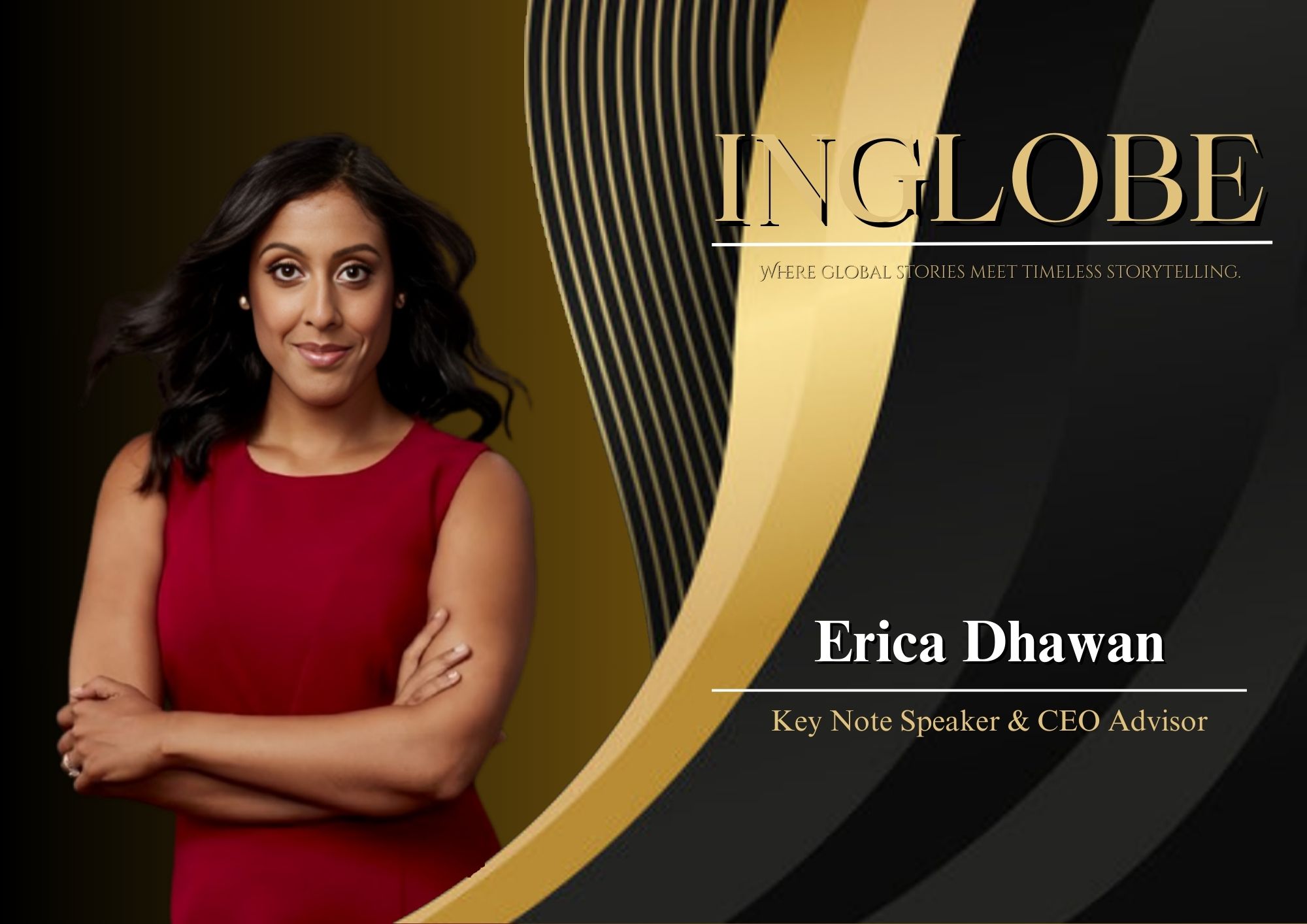
Erica Dhawan has spent much of her career studying and shaping this transformation.
As a globally recognized thought leader on 21st-century teamwork and innovation, Dhawan helps organizations understand how collaboration operates in a world defined by digital communication and distributed teams. Her work explores how trust, clarity, and connection can be built even when colleagues may never meet face to face.
Through her writing, research, and advisory work with global organizations, Dhawan has helped redefine what leadership looks like in an era where communication flows across screens rather than conference tables.
Erica Dhawan: Leadership Built on the Power of Connection
Erica Dhawan’s approach to leadership begins with a simple observation. Modern organizations operate as networks rather than hierarchies.
Information moves rapidly across departments, industries, and global markets. In such an environment, the most valuable leaders are not those who control information but those who enable it to flow effectively.
Dhawan describes this ability as connectional intelligence.
Connectional intelligence is the capacity to bring together people, knowledge, and ideas in ways that create value beyond what individuals could achieve independently. It recognizes that innovation rarely occurs in isolation. Instead, breakthroughs emerge when diverse perspectives intersect and collaborate.
In practical terms, this means leaders must develop the ability to bridge silos within organizations. Teams working in different departments, locations, or disciplines must be able to share insights and collaborate without unnecessary barriers.
Dhawan’s work helps organizations build systems that encourage these connections.
Rethinking Teamwork in a Distributed World
The rise of digital communication has fundamentally changed how teams collaborate.
Where employees once worked within the same office environment, today’s organizations frequently operate across multiple time zones and digital platforms. Email, messaging tools, video calls, and collaborative software have become the primary channels through which ideas are exchanged.
While these technologies allow teams to work together from anywhere, they also introduce new challenges.
Miscommunication can occur more easily when messages are written rather than spoken. Delayed responses may be interpreted as disengagement. Cultural differences can shape how communication styles are understood.
Dhawan’s research addresses these challenges directly.
Her bestselling book Get Big Things Done: The Power of Connectional Intelligence explores how leaders can unlock the collective intelligence of teams by strengthening collaboration across networks.
The central idea is straightforward but powerful. Organizations achieve their greatest success when they enable people to work across boundaries rather than within isolated silos.
Understanding the Signals of Digital Communication
As digital communication became central to modern work, Dhawan began exploring another critical question.
How do people interpret trust and intent when communication occurs primarily through screens?
This question led to the concept she calls digital body language.
In traditional face to face communication, individuals rely on nonverbal signals such as tone, eye contact, and posture to understand meaning. These cues help people interpret whether a message is supportive, urgent, uncertain, or collaborative.
In digital environments, those signals are often missing.
Instead, trust is communicated through different indicators. The speed of a response, the clarity of a message, and even the structure of an email can influence how communication is perceived.
Dhawan’s book Digital Body Language: How to Build Trust and Connection, No Matter the Distance explores these dynamics in depth.
By helping teams recognize how digital signals shape relationships, she equips organizations to communicate more effectively in virtual environments.
A Global Voice on Collaboration and Innovation
Erica Dhawan’s ideas have resonated with organizations across the world.
She has delivered keynote presentations at major global forums including the World Economic Forum in Davos and has advised leaders in industries ranging from technology and finance to healthcare and government.
Her clients include companies such as Deloitte, PepsiCo, Goldman Sachs, and Cisco, organizations seeking to strengthen collaboration and accelerate innovation within complex global operations.
These organizations face a common challenge. As companies grow larger and more global, internal communication can become fragmented.
Dhawan’s work focuses on helping leaders restore alignment by building cultures where ideas move freely across departments and teams.
Her influence has been recognized internationally. She has been named among the world’s most influential management thinkers and ranked among the leading keynote speakers addressing the future of leadership and teamwork.
The Academic Foundations of Collaboration
Behind Dhawan’s practical insights lies a strong academic foundation.
Her educational journey includes degrees from three of the world’s most respected institutions.
She earned a Bachelor of Science from The Wharton School at the University of Pennsylvania, followed by an MBA from the MIT Sloan School of Management. She later completed a Master of Public Administration at the Harvard Kennedy School.
This interdisciplinary background combining business strategy, technology, and public policy has shaped the frameworks she develops for organizations.
Dhawan’s work draws on research from behavioral science, organizational psychology, and leadership studies, translating academic insight into strategies that can be applied within real world organizations.
Her ability to combine rigorous research with practical advice has made her work particularly valuable for leaders navigating rapidly changing business environments.
Collaboration as the Engine of Innovation
Across all of her work, Erica Dhawan consistently emphasizes a central message.
Innovation is rarely the product of individual genius alone.
Instead, progress occurs when diverse perspectives combine to generate new ideas and solutions.
Organizations that foster collaboration across teams and disciplines are better positioned to adapt to change. They respond faster to challenges, integrate knowledge more effectively, and create environments where creativity can flourish.
This principle becomes even more important in an era defined by artificial intelligence and digital transformation.
Technology may accelerate communication, but it does not replace the human relationships that sustain innovation.
Leaders must therefore focus not only on implementing new tools but also on cultivating cultures of openness, curiosity, and trust.
Designing the Future of Leadership
As workplaces continue to evolve, Erica Dhawan’s insights offer a roadmap for navigating the complexities of modern collaboration.
Organizations will increasingly rely on distributed teams, digital communication, and global networks of expertise. The ability to connect people across these systems will become one of the defining leadership skills of the future.
Dhawan’s work reminds leaders that technology alone does not create progress.
Innovation emerges when individuals feel empowered to share ideas, challenge assumptions, and work together toward shared goals.
In this sense, collaboration becomes more than a management strategy.
It becomes the foundation upon which organizations build their future.
And in a world where connection shapes possibility, Erica Dhawan continues to demonstrate that the most powerful technology available to leaders is still the human capacity to collaborate.
Erica Dhawan: The New Language of Leadership — Connection, Collaboration & Digital Trust