Goldman Sachs Strategist Warns Stock Market Shows Warning Signs Similar to the 2008 Financial Crisis
By: INGLOBE Magazine News Desk | March 4, 2026
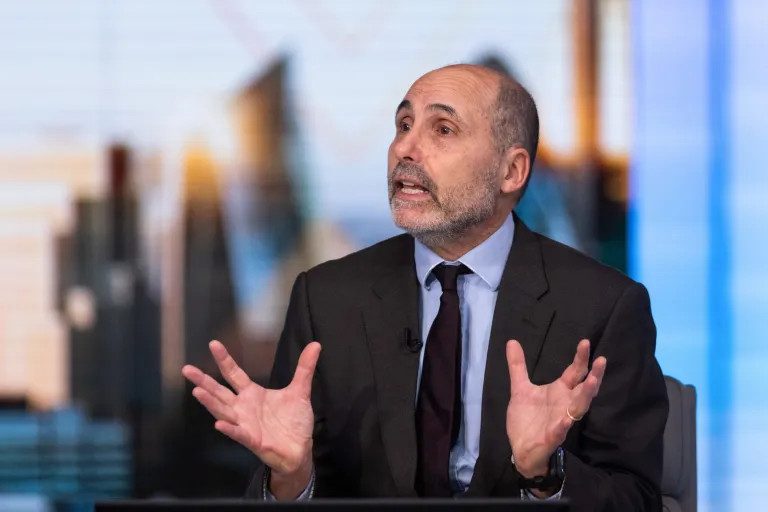
The global stock market may be flashing warning signs similar to the 2008 financial crisis, according to Peter Oppenheimer, chief global equity strategist at Goldman Sachs. In a recent research note, Oppenheimer warned that falling equity risk premia and elevated global stock valuations could leave markets vulnerable to sudden corrections.
His warning carries weight across Wall Street because Oppenheimer has previously made accurate contrarian market calls. While he stopped short of predicting a full bear market, he emphasized that current conditions resemble patterns seen before the 2008 financial crisis.
Stock Market Warning Signs Similar to the 2008 Financial Crisis
According to Oppenheimer, equity risk premia — the additional return investors expect from stocks compared to safer assets — have dropped sharply. This measure is now approaching levels last seen during the buildup to the global financial crisis.
When equity risk premia fall, investors are accepting lower compensation for risk. That makes stock markets more vulnerable to economic shocks, geopolitical tensions, or technology competition. Oppenheimer noted that today's combination of AI-driven uncertainty, inflation pressures, and global geopolitical instability creates a challenging environment for equities.
He added that stock valuations are not just high in the United States but elevated globally. Every major region now trades above its long-term historical averages.
Why Global Stocks May Be Overvalued
Oppenheimer previously warned in 2024 that U.S. stocks were becoming excessively expensive and advised investors to diversify internationally. His prediction proved accurate as markets in Europe and Japan surged while American technology stocks faced pressure during the so-called “sell America” trade.
In late 2025, he projected that the S&P 500 would generate an annual return of about 6.5% over the next decade — lower than most other global regions. Emerging markets, by contrast, could deliver returns close to 11% per year.
Despite these warning signs, Oppenheimer stressed that today's market environment is not identical to the period before the 2008 crisis. Corporate, household, and banking balance sheets remain relatively healthy, which reduces the likelihood of systemic collapse.
Technology Stocks Face a Historic Shift
Another major development highlighted in Goldman Sachs research is the sudden reversal in technology stock performance. Tech companies have recently experienced one of their weakest periods relative to other sectors in nearly 50 years.
The shift is partly driven by investor concerns about artificial intelligence spending and uncertainty about whether traditional software business models could be disrupted by rapid AI innovation.
As a result, industrial companies — which historically traded at lower valuations — are now trading at a premium to some technology stocks. This reversal represents one of the most unusual sector rotations in decades.
Could a Market Correction Be Coming?
Oppenheimer believes the risk of a short-term correction is high but does not expect a deep or prolonged bear market. Goldman Sachs economists currently forecast U.S. GDP growth of about 2.8% in 2026, and global earnings estimates have continued to rise since the start of the year.
Historically, geopolitical shocks typically trigger an average S&P 500 decline of about 6% over roughly 18 days before markets stabilize.
For investors, Oppenheimer recommends maintaining diversified portfolios across sectors, geographic regions, and investment factors. Diversification, he said, remains the best strategy for navigating uncertain markets.
“We see correction risks as high given current valuations,” Oppenheimer wrote, “but we believe any downturn could present a buying opportunity rather than the beginning of a severe bear market.”