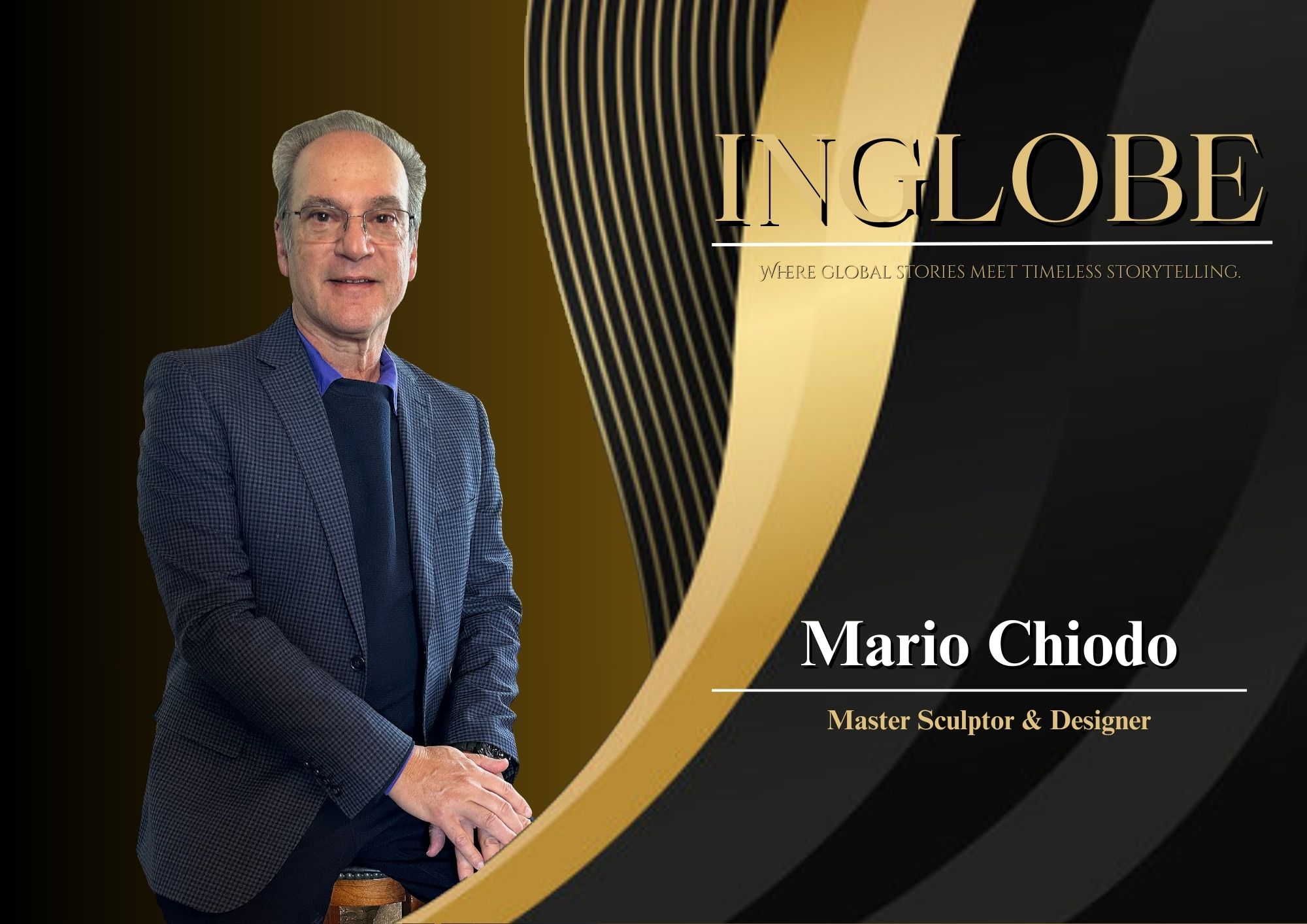
For centuries, sculpture has been used to celebrate power. Kings, generals, conquerors, and empires have all cast themselves in bronze and stone to secure their place in memory. Yet memory without meaning becomes decoration. Monument without morality becomes spectacle. What the world rarely receives is public art that does not glorify dominance, but elevates humanity.
Mario Chiodo recognized this absence early.
While much of the modern art world oscillated between abstraction and commercial spectacle, Chiodo quietly pursued something more enduring: sculpture as moral architecture. Not art for attention. Art for reflection. Art placed in public space that carries public responsibility.
As an internationally recognized monumental sculptor, designer, and visionary behind projects such as Remember Them: Champions for Humanity, Chiodo has built more than statues. He has built narrative ecosystems where empathy, courage, and historical conscience converge.
From Monsters to Monuments
Mario’s journey did not begin in civic plazas or cultural landmarks. It began in the dirt.
As a child, he sculpted creatures from mud dug out of his backyard. Dragons. Monsters. Imagined beings born from curiosity and intensity. Creation was instinctive. Form was language. Even before formal education, clay was his translator.
But alongside fantasy lived something else: reverence for moral courage.
Figures such as Abraham Lincoln, Frederick Douglass, and Mahatma Gandhi captivated him not for their mythology, but for their choices. They were imperfect individuals who made impossible decisions under immense pressure. That tension between imagination and history would later define his life’s work.
The Renaissance Discipline
Unlike many contemporary artists shaped by theory, Mario was shaped by discipline.
His training at The Renaissance School immersed him in classical geometry, anatomical study, and form construction. Under the guidance of Kathryn Porter, he was given something rare: freedom paired with rigor. Twenty-five pounds of clay. Two weeks. No distraction.
This was not art as hobby. It was art as vocation.
Mornings were dedicated to studying the human figure with Renaissance precision. Afternoons transformed that precision into imaginative reinvention. This duality became his signature: realism anchored in discipline, imagination driven by structure.
He learned early that mastery is not about arrival. It is about perpetual study.
Building Success - And Questioning It
At twenty-three, Mario built a Halloween design business from his garage. Thirty original characters. Every dollar invested. No guarantee of return.
The business scaled. Partnerships formed. Hollywood doors opened. Commercial success followed.
But success introduced a question that would not disappear.
What is achievement worth if it does not serve others?
September 11 and the Shift Toward Purpose
The events of September 11, 2001, crystallized what had been forming internally.
Watching collective grief, heroism, and sacrifice unfold on a global scale forced a recalibration. Mario understood that imagination alone was no longer enough. Art needed to carry memory. Sculpture needed to honor courage. Creation needed consequence.
From this realization emerged Remember Them: Champions for Humanity - a monumental tribute to individuals whose moral decisions changed history.
This was not merely a sculpture project. It was an act of civic commitment.
Hundreds of letters were handwritten seeking support. Rejections accumulated. Years passed. Yet persistence remained unwavering.
Eventually, the monument found its home in Oakland, his birthplace.
Sculpting Moral Weight
Creating Remember Them required more than technical proficiency. It required emotional immersion.
Each historical figure represented was studied not just for likeness, but for internal conflict. What did they feel at the moment of decision? What posture reflects courage? What expression reveals moral burden?
Through gesture and composition, Mario sought to humanize greatness. These were not distant icons. They were people who chose service over safety.
“Every figure carries the weight of a decision,” he often reflects.
In this philosophy lies the heart of his work. Art is not decoration. It is dialogue.
Public Art as Responsibility
Mario does not romanticize monument-building. He understands its power and its danger.
Public sculpture shapes collective memory. It influences who we celebrate and why. Therefore, it carries ethical weight.
In an era where statues are questioned, removed, or recontextualized, Mario’s approach offers a blueprint. Monuments should not immortalize dominance. They should elevate conscience.
When Creation Replaces Destruction
Mario Chiodo’s philosophy can be distilled into one quiet but powerful belief:
If we are creating, we are not destroying.
In a time defined by division, acceleration, and noise, his work stands as architectural patience. Bronze cast not to dominate, but to remember. Clay shaped not for spectacle, but for service.
He does not seek legacy through fame. He seeks legacy through impact.
And perhaps that is the true measure of a leader transforming the global future in 2026 not scale alone, but substance.
Mario Chiodo: Leaders of Impact Transforming the Global Future in 2026