US Navy's Hormuz Blockade Sends Stock Futures Down and Oil Prices Surging
By INGLOBE Magazine News Desk | April 13, 2026
US-Iran Tensions Escalate Following Failed Talks
Hopes for peace dwindled after recent negotiations between the United States and Iran ended without resolution. This development prompted President Donald Trump to announce a significant naval blockade targeting the Strait of Hormuz, a crucial passage for global oil shipments.
The blockade aims to curb Iran’s oil exports, which have continued despite tensions, while the country has intermittently restricted transit from other nations through strategic drone and missile attacks.
This move comes after a period of relative calm that had bolstered investor confidence and stock prices, suggesting that the conflict might reignite with new intensity.
Market Reactions: Stocks Fall, Oil Prices Surge
The announcement of the blockade had immediate repercussions on the financial markets. Futures for the Dow Jones Industrial Average dropped by 531 points, or 1.10%, while S&P 500 futures saw a decline of 1.15%. Nasdaq futures also fell by 1.32%.
In contrast, oil markets reacted sharply, with US oil futures rising 8.63% to reach $104.90 per barrel, and Brent crude increasing by 8.04% to $102.85. Meanwhile, gold prices decreased by 2.28%, settling at $4,678 per ounce.
The currency markets also responded, with the US dollar strengthening by 0.49% against the euro and 0.32% against the yen. The yield on the 10-year US Treasury remained steady at 4.317%.
Strategic Naval Operations in the Strait of Hormuz
The US military’s strategy involves leveraging naval power to disrupt Iran’s economic activities and weaken its influence over the Strait of Hormuz. According to the US Central Command, the blockade is set to commence on Monday at 10 am ET and will selectively target vessels entering or leaving Iranian ports.
Despite President Trump’s assertive declaration that the strait should be universally accessible, the blockade will be enforced without bias against ships of all nations engaging with Iranian ports in the Arabian Gulf and Gulf of Oman.
The goal is to undermine Iran’s oil revenues, which are vital for its economy and military capabilities, particularly the Islamic Revolutionary Guard Corps.
US Navy Prepares for Potential Confrontations
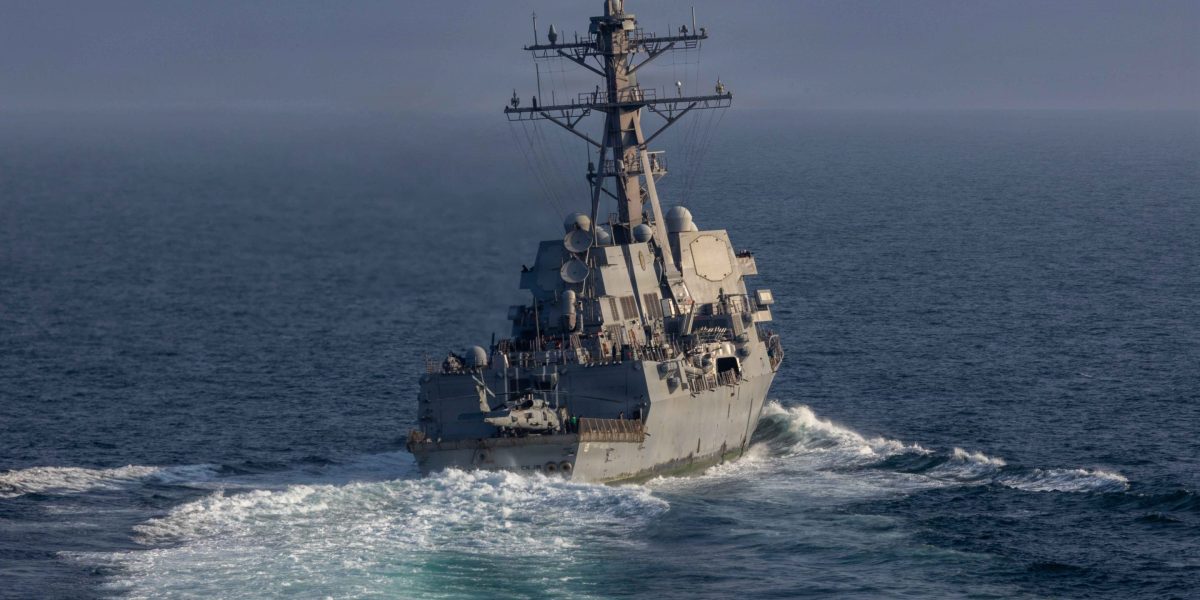
In preparation for the blockade, the US Navy dispatched two destroyers through the Strait of Hormuz on Saturday, tasked with initiating mine-clearing operations. Central Command is working to establish a new safe passage for commercial shipping to ensure the continued flow of goods.
Iran’s Islamic Revolutionary Guard Corps (IRGC) has challenged the presence of these warships, issuing warnings and reportedly deploying a drone, which the US ships successfully neutralized.
On Sunday, the IRGC issued a stern warning, threatening a ‘strong and forceful response’ to any foreign naval forces infringing upon their territories in the strait.
Navigating the ‘Kill Box’: Strategic Implications
Previously, US naval forces had steered clear of the Strait of Hormuz due to its reputation as an Iranian ‘kill box,’ rife with threats such as anti-ship missiles, drones, and fast-attack boats.
Tehran’s ability to disrupt tanker traffic has been its leverage against US actions, with the failure to fully reopen the strait causing oil prices to soar.
If the US Navy succeeds in establishing a secure navigation route through the strait, it could significantly weaken Iran’s strategic hold in the region, removing a critical bargaining chip from its arsenal.
Expert Insights on the Evolving Maritime Conflict
Salvatore Mercogliano, a professor at Campbell University specializing in military and maritime history, emphasized the importance of re-establishing safe passage through the Strait of Hormuz.
He noted that the deployment of US destroyers is a decisive step toward reassuring the maritime industry of reduced risk, potentially encouraging commercial ships to resume transit through the strait.
Mercogliano’s insights underscore the strategic balancing act required to neutralize Iranian threats while maintaining the global flow of oil.