Hungary on the Brink: Magyar's Challenge to Orbán's Long Reign
By INGLOBE Magazine News Desk | April 12, 2026
Final Campaign Efforts in Hungary’s Pivotal Election
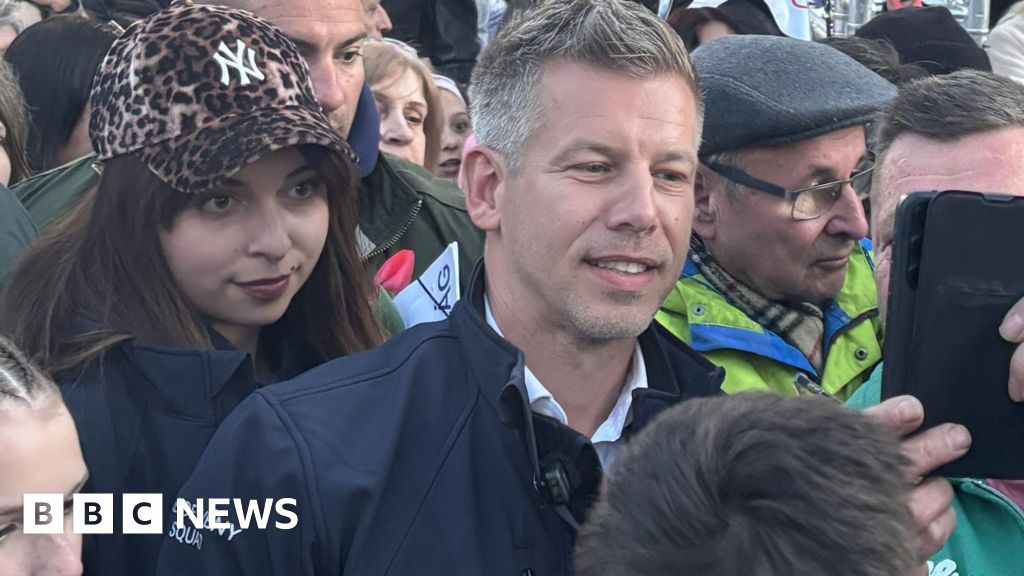
As Hungary approaches a crucial election, the two primary contenders are making every effort to sway undecided voters. Péter Magyar, the main opposition candidate, is striving to end Viktor Orbán’s 16-year dominance through his party, Fidesz. With a palpable sense of optimism, Magyar addressed a crowd of enthusiastic supporters, urging them to push forward in the final stages of the election. He emphasized the possibility of achieving a two-thirds majority, a milestone that could reshape Hungary’s political landscape.
Magyar’s campaign trail brings him to Debrecen, Hungary’s second-largest city, located in the north-east. Meanwhile, Orbán, who is trailing in most opinion polls, plans to hold a significant rally in Budapest to galvanize his base. The tension and anticipation in the air are palpable as both sides pull out all stops to secure a victory.
Massive Turnout at Anti-Fidesz Rally
In a display of growing dissatisfaction with the current government, tens of thousands gathered in Budapest’s iconic Heroes’ Square for a concert opposing Fidesz. Many attendees, like first-time voter Fanni, traveled hours to be part of this momentous occasion. Despite not being Magyar’s ideal candidate in different circumstances, Fanni feels this election presents a unique opportunity for change.
The swelling discontent with Orbán’s administration has been effectively harnessed by Magyar, who once belonged to Fidesz but later broke away to form a new opposition movement. This broad-based coalition is drawing significant support from a cross-section of the Hungarian populace, uniting those disillusioned with the status quo.
Orbán’s International Alliances and Challenges
Despite the domestic challenges, Orbán has fortified his international alliances, notably with U.S. Vice-President JD Vance visiting Hungary to bolster the campaign. Additionally, former President Donald Trump has offered economic support pledges, promising to enhance Hungary’s economy if Orbán secures another term.
Orbán’s international strategy has elevated his profile beyond Hungary’s 9.6 million residents, positioning him as a significant player on the global stage. His close ties with Trump and Russian President Vladimir Putin have stirred controversy and strained relationships with European Union allies and neighboring Ukraine.
Magyar’s Rising Popularity Among Young Voters
Péter Magyar, a former insider turned critic of Fidesz, has gained momentum by appealing to younger voters and those seeking reform. His grassroots movement, Tisza, has rapidly expanded, attracting support from across the political spectrum. Analysts like Zsuzsanna Végh note a significant shift among young voters, with Fidesz struggling to capture their attention and approval.
This demographic shift is becoming evident even in traditionally pro-Fidesz areas, with smaller towns and some villages showing signs of transitioning toward the opposition. The scale of Magyar’s rallies and the enthusiasm they generate are seen as indicators of this changing political tide.
Potential for Change and the Challenge of Reform
Should Magyar secure a parliamentary majority, it would herald the end of Orbán’s tenure and many of his policies. However, dismantling the entrenched Fidesz-supporting structures within the judiciary and other areas would require Magyar to achieve a two-thirds majority, a formidable challenge.
Key battlegrounds include historically Fidesz-dominated regions such as Székesfehérvár. Losing these strongholds would be a significant blow to Orbán. While many in these areas remain loyal to Fidesz, there are growing voices calling for change, highlighting issues of corruption and economic stagnation.
Corruption Allegations and Economic Concerns
Corruption and favoritism have become major points of contention, alienating some of Orbán’s traditional supporters. Public contracts have often favored those in his inner circle, and media outlets have been co-opted by allies, stifling independent journalism.
The economic criticisms extend to accusations of fear-mongering in the campaign, with Orbán’s rhetoric often focusing on external threats from the EU and Ukraine. Notably, György Wáberer, a prominent Hungarian businessman, condemned this approach, urging voters to decide between aligning with Europe or Russia.
Hungary’s Historical Context and Future Outlook
Orbán’s connection with Putin has ensured favorable fuel deals for Hungary during Russia’s conflict in Ukraine. However, historical sentiments remain strong, with chants of ‘Russians go home’ resurfacing, echoing Hungary’s past struggles against Soviet oppression.
As the election looms, the country stands at a crossroads, with many citizens voicing a desire for change. The upcoming vote will not only determine Hungary’s immediate future but also its long-term place within the European and global communities.