Ukrainians Remain Skeptical of Easter Truce Amid Conflict
By INGLOBE Magazine News Desk | April 12, 2026
A Fragile Easter Truce
An Easter ceasefire, intended to offer a brief reprieve from conflict, was agreed upon by Russia and Ukraine, taking effect on Saturday afternoon. However, just 38 minutes in, air raid sirens pierced the air in Kharkiv, a stark reminder of the ongoing tensions in northeastern Ukraine.
By Sunday morning, as Ukrainian families gathered to celebrate Orthodox Easter, the military had already documented over 2,000 breaches of the ceasefire along the front lines. Despite no reports of long-range missiles or drone attacks, both Ukrainian and Russian forces reported significant violations, highlighting the fragility of the truce.
This temporary pause in hostilities was meant to last until Monday, aiming to provide much-needed relief over four years into Russia’s extensive invasion. However, the history of broken promises left trust in the truce at a low point.
Easter Traditions Amidst War
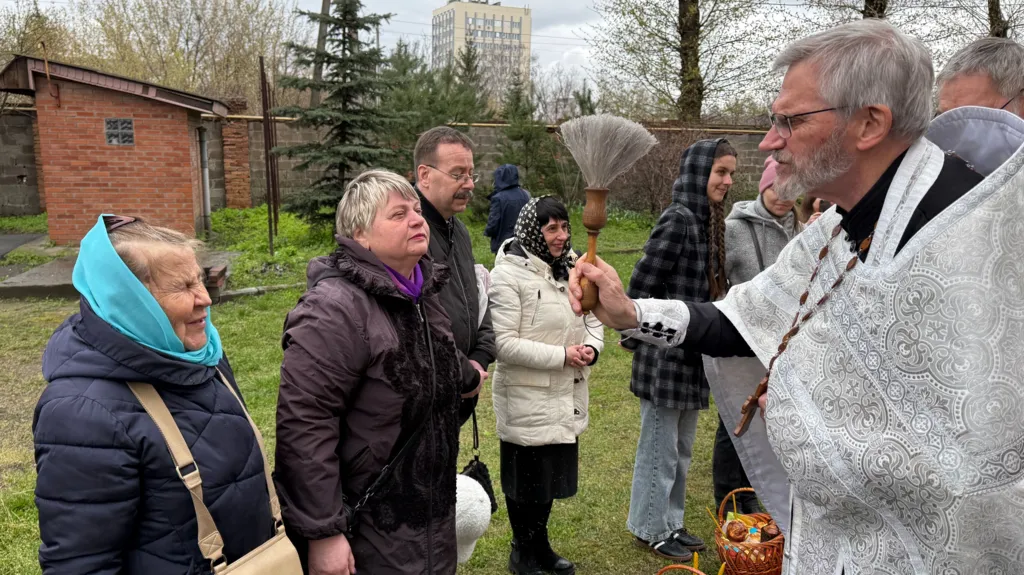
In the shadow of war, Ukrainians continued their Easter traditions. As the clock approached 16:00 (13:00 GMT), marking the start of the truce, people gathered at St John the Theologian Church. They carried baskets brimming with iced Easter cakes, vividly painted eggs, and sausages for a traditional blessing.
Typically, the service would unfold just before midnight, complete with a procession around the church. However, due to a curfew imposed as a safety measure, it was held in the afternoon this year. The church itself, bearing scars from the early days of the war, stood with boarded-up windows, a testament to the conflict’s reach.
Father Viktor, leading the service, questioned the credibility of a Russian ceasefire, reflecting the skepticism felt by many. ‘Do you believe them?’ he asked, his voice echoing the doubts of those gathered.
Military Preparations Continue
At a military training ground approximately 12 miles (19km) from the Russian border, the Yasni Ochi strike UAV unit, part of the Khartia corps, spent the weekend in preparation for potential conflict. The unit tested new equipment designed for the front lines, including kamikaze drones loaded with explosives.
Despite the ceasefire, Commander Heorhiy instructed his troops to remain vigilant, expecting an attack despite the truce. ‘Russia says one thing, then does another,’ he stated, underscoring the importance of readiness.
Amidst the tension, those not on duty delivered Easter cake and non-alcoholic wine to their comrades at the front, using drones to bypass the dangers of the battlefield. The village used for their training, once occupied by Russian forces in 2022 and later reclaimed by Ukraine, remains a reminder of the conflict’s proximity.
The Quest for Genuine Peace
While some Ukrainians hold onto the hope of peaceful negotiations, many remain realistic about the current situation. Commander Heorhiy expressed the necessity of continuing the fight until Ukraine could demand more favorable terms in negotiations with Russia.
This sentiment is buoyed by Ukraine’s growing role as a provider of drone technology and expertise, particularly as conflicts in the Middle East increase demand for such resources. However, the peace process, initially supported by the US, has stalled with American attention diverted towards tensions with Iran.
Ukraine is eager for strong security assurances from its allies, particularly from the US, to prevent future invasions. ‘It’s not our choice. I don’t like war, my guys don’t like it. We used to have good civilian life,’ Heorhiy reflected, highlighting the stark shift from peacetime professions to wartime necessities.
Life Under Constant Threat
Returning to Kharkiv, the ongoing conflict’s impact is evident. The city’s ring road is now draped in netting designed to ensnare Russian drones, yet it offers little protection against missile strikes.
In one particularly hard-hit suburb, several residential blocks have been reduced to ruins. A missile strike last month claimed 11 lives, devastating an entire section of a building. Among the debris, personal artifacts such as photographs serve as poignant reminders of the human cost.
Residents like Olha, who survived by taking shelter with her elderly mother, express a deep yearning for peace. ‘This truce is only 1.5 days. But at least we can rest a bit, because here, you expect to die every second,’ she shared, her voice filled with exhaustion and hope.
A Call for Lasting Ceasefire
President Volodymyr Zelensky has proposed extending the temporary truce into a more permanent ceasefire, aiming to resume talks with Russia for a comprehensive peace agreement. However, the Kremlin has dismissed this offer, planning to resume full-scale attacks come Monday.
The desire for peace is palpable among Ukrainians, who are weary of the ongoing conflict and its toll on their lives. As Olha poignantly questioned, ‘Will it ever stop?’ her words echo the sentiments of countless others caught in the crossfire.
While the temporary ceasefire provides a brief respite, the quest for a lasting peace remains a distant hope for many, overshadowed by the harsh realities of war.