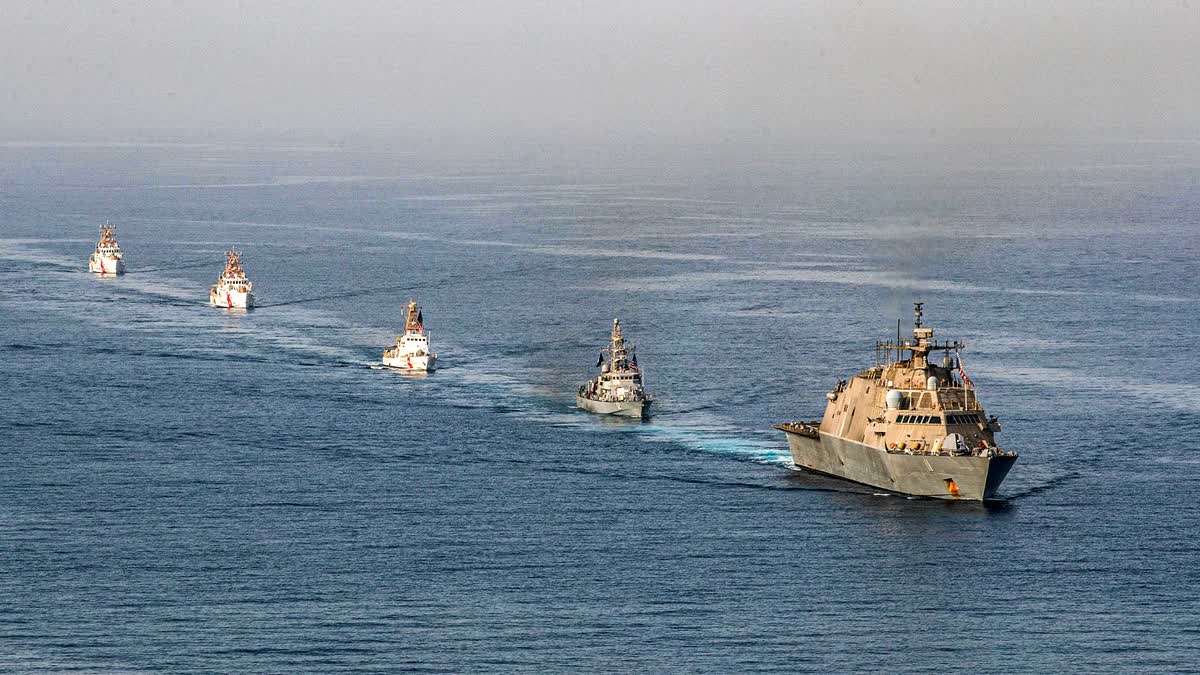
US blockade Iran Strait of Hormuz began on Monday, April 13, 2026, as the United States military officially moved to restrict Iranian access to key shipping routes following the collapse of peace negotiations in Islamabad, Pakistan. This major escalation marks a turning point in rising US-Iran tensions and has already begun affecting global oil markets and international diplomacy.
Talks were led by Vice President JD Vance, who stated that Iran ultimately rejected US conditions after more than 16 hours of intense closed-door discussions. Iranian officials, however, countered that the negotiations failed due to what they described as “unreasonable and excessive demands” from Washington.
What Is Happening in the Strait of Hormuz?
The Strait of Hormuz is one of the world’s most critical oil transit chokepoints, with nearly 20% of global petroleum passing through it daily. The US blockade Iran Strait of Hormuz marks a significant escalation in an already tense geopolitical situation.
President Donald Trump issued a strong warning, stating that any Iranian vessels approaching the blockade zone would face immediate military action. This announcement has raised fears of direct confrontation between US and Iranian forces, potentially triggering a wider conflict in the Middle East.
Military analysts suggest that such a blockade could severely restrict Iran’s ability to export oil, placing further strain on its economy while increasing pressure on global energy markets.
Impact on Global Oil Prices and Financial Markets
The blockade has already sent shockwaves through global financial markets. Oil prices surged dramatically, with West Texas Intermediate (WTI) crude rising over 8% to surpass $104 per barrel.
Investors are reacting to fears that disruptions in the Strait of Hormuz could significantly reduce global oil supply. Energy-dependent economies, particularly in Asia and Europe, are expected to feel the impact most if the situation worsens.
Stock markets also showed signs of volatility as traders moved toward safer assets like gold and the US dollar. Experts warn that prolonged tensions could lead to sustained inflation and slower global economic growth.
Global Reactions to the US Blockade
World leaders have responded cautiously to the unfolding crisis. UK Prime Minister Keir Starmer made it clear that Britain would not participate in the blockade, stating that the UK is “not getting dragged into war.”
France and the United Kingdom have jointly proposed organizing a multinational conference aimed at ensuring safe navigation through the Strait of Hormuz and preventing further escalation.
Meanwhile, Pope Leo XIV voiced strong opposition to the conflict, stating that he would continue to speak out against war and advocate for peace, regardless of political pressure.
What Happens Next?
Experts remain divided on the potential outcomes of the US blockade Iran Strait of Hormuz crisis. Some analysts believe the increased pressure could force Iran back to the negotiating table, opening the door for renewed diplomatic efforts.
Others warn that the blockade could provoke retaliation from Iran, including potential disruptions to shipping routes or military responses, which may escalate into a broader regional or even global conflict.
The situation remains highly fluid, and developments over the coming days will be critical in determining whether diplomacy or confrontation prevails.
Conclusion
The United States blockade of Iran at the Strait of Hormuz represents a critical turning point in global geopolitics, with the potential to reshape regional and international dynamics. As one of the world’s most vital oil transit routes, any disruption in the strait carries immediate and far-reaching consequences for energy markets, global trade, and economic stability. The sharp rise in oil prices and increased market volatility reflect growing concerns among investors and governments alike.
World leaders have urged caution, emphasizing the need for diplomacy to prevent further escalation. However, the strong rhetoric and military posturing from both sides have heightened fears of a direct confrontation. If tensions continue to intensify, the risk of a broader conflict involving multiple nations cannot be ruled out.
At the same time, some analysts believe the blockade could serve as leverage to push Iran back toward negotiations, potentially opening a path for de-escalation. Much will depend on how both nations respond in the coming days.
Ultimately, the situation remains highly uncertain. The decisions made now will not only determine the outcome of this crisis but could also have lasting effects on global peace, security, and economic stability for years to come.




Leave a Reply